
Website for roofing companies that wins the storm-season call.
A website for roofing companies shouldn't force a choice between looking good and getting found. I build both into one. Your site signals that you're the established, trustworthy choice the moment a homeowner lands on it, holds up when storm season drives a surge of searches, and keeps climbing in Google as it builds authority. It also encourages satisfied homeowners to leave reviews, so your reputation grows alongside your rankings.
By Jonah Chegarnov · Updated
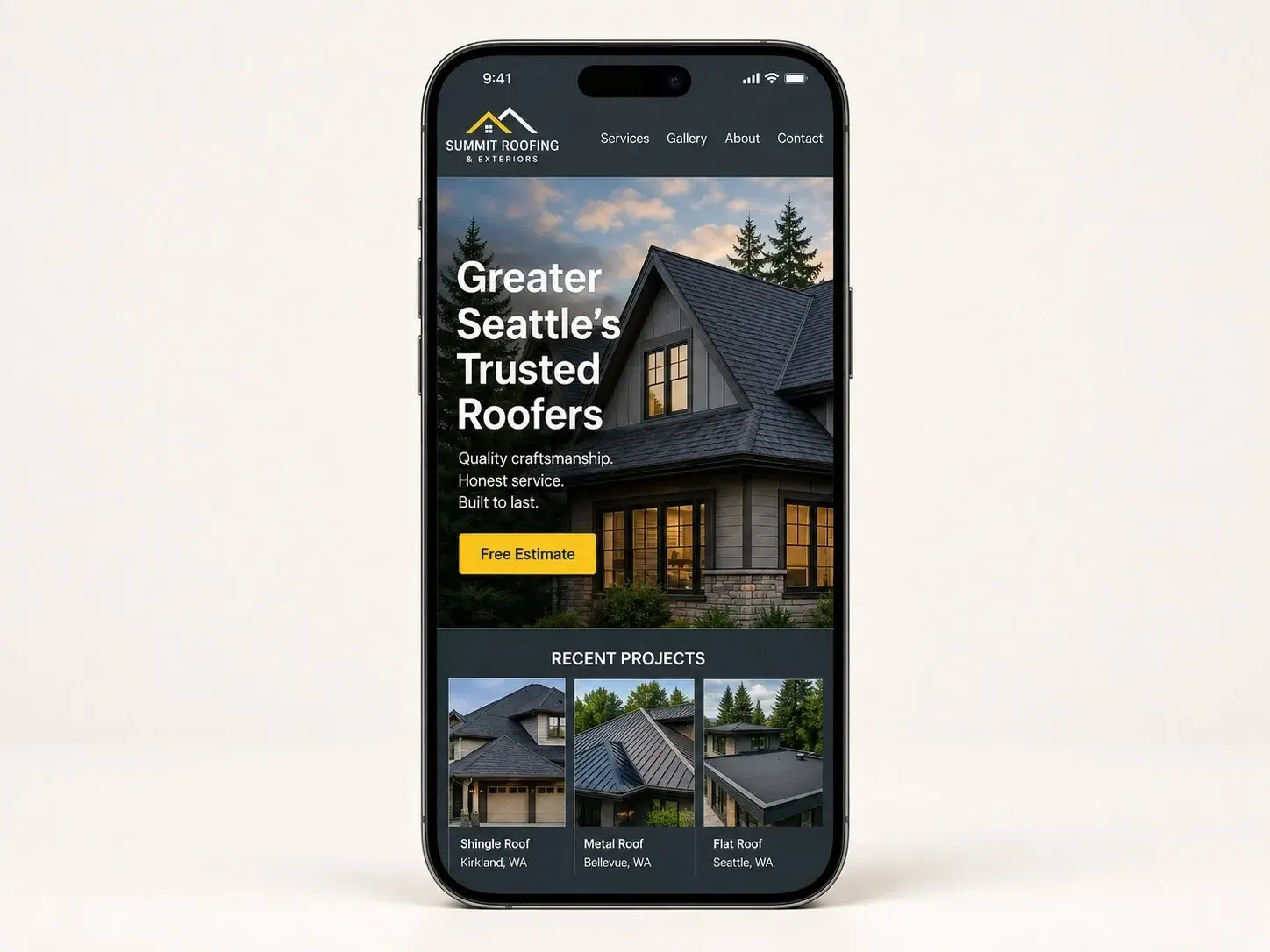
Why Roofing sites are different.
Roofing search behavior is uneven in a way other trades aren't. A bad windstorm sends "emergency roof tarping" and "storm damage roof repair" searches surging, and the contractor who shows up first gets the call. The other heavy share is insurance-claim work: homeowners with hail or storm damage who need a contractor who can document, photograph, and bill insurance correctly. Most roofer sites treat both flows as afterthoughts. The ones that convert separate the storm-emergency CTA from the normal estimate path, surface licensing and insurance bonding clearly, and design the contact form to capture insurance carrier info from the first interaction. They also load fast on a phone, because most of these searches happen outdoors right after the damage, and a site that stalls on mobile loses the lead before the form ever appears. Real Google reviews sit on the page so the homeowner can see neighbors trusted you before they hand over a roof.
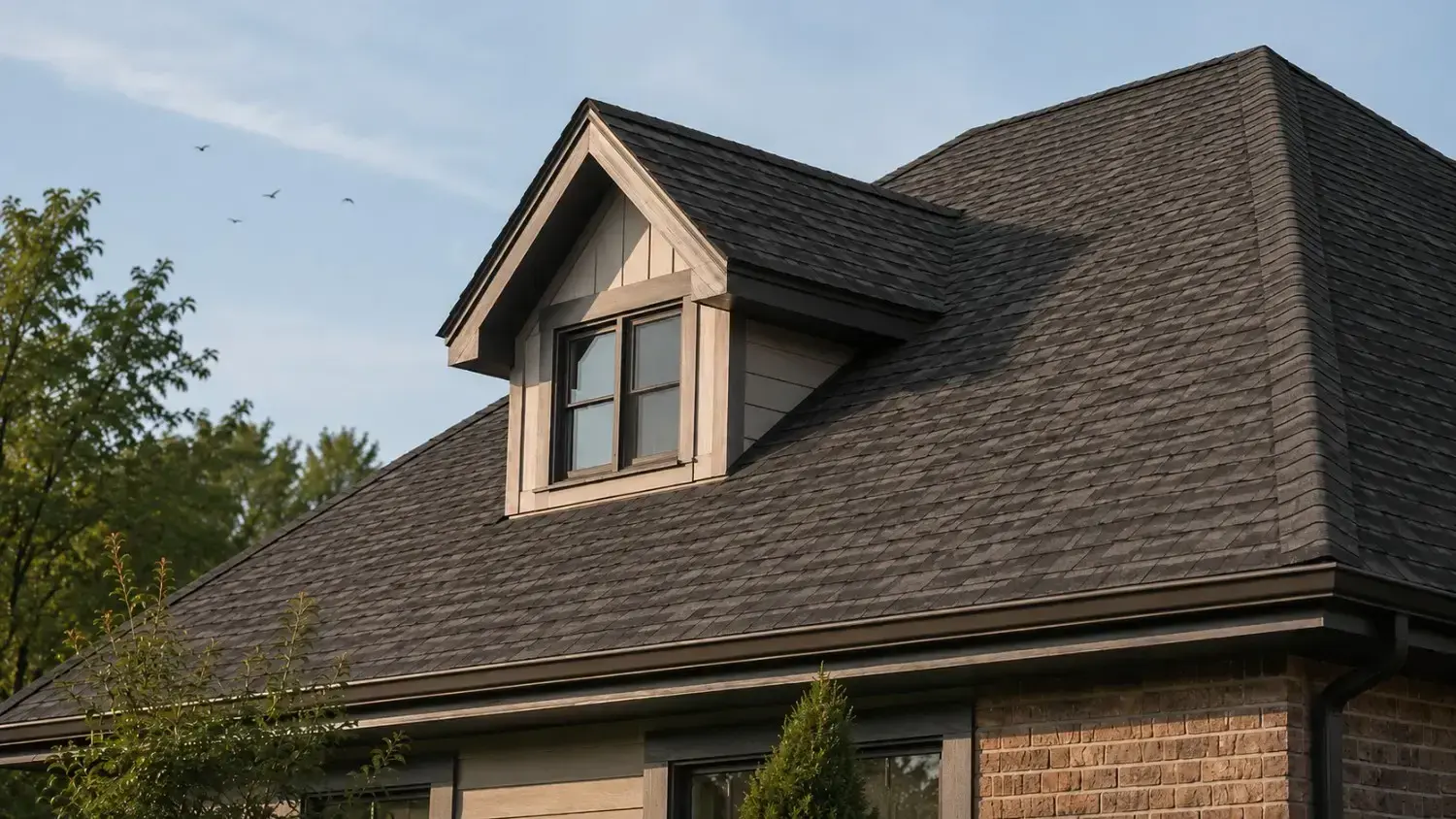
What goes into a great website for roofing companies.
- Storm-emergency CTA separate from the estimate path
- A second, distinct CTA for emergency tarping and tree-impact damage, visible above the fold and routed to the on-call line, not the standard form.
- Insurance-claim intake fields
- Contact form captures carrier, claim number, and adjuster info up front so you can prep the documentation before the first phone call.
- Before / after gallery built for trust
- Tear-off and re-roof photos with project context (neighborhood, decking condition, ventilation work) that prove you're not subcontracting to whoever's cheapest that week. Paired with the real Google reviews shown on the page, that gallery is the content that actually pulls homeowners from research into a call.
- Financing partner integration
- GreenSky, Hearth, or your preferred financing partner surfaced on every estimate page, full re-roofs are the single highest LTV job and the financing question kills more deals than price does.
- Service-specific pages, not one generic 'services' page
- Repair, re-roof, gutter integration, skylight, and metal roofing each get their own page with their own intent and their own conversion path.
- Roofing-specific schema
- RoofingContractor LocalBusiness schema with accurate areaServed and Service entries for each offering, so the local pack and AI Overview both have the right data to surface.
How I approach Roofing web design.
Every site I build runs on the same modern, server-rendered stack, the same one powering chegtech.com. That's deliberate. The default for local-business sites is WordPress with a page builder, and the builder layer tanks Core Web Vitals and ceiling SEO. Custom-built means faster, cleaner, and built to rank from day one.
A new website doesn't earn Google's full trust overnight. Search engines tend to be cautious with newer domains for the first few months, so I build the foundation correctly from day one, with clean structure, proper SEO, and the right signals in place. That way, as your domain ages and gains authority, your site is already positioned to climb instead of playing catch-up.
SEO + AEO Built In
- Local SEOGBP-aligned content, NAP consistency, citation cleanup, neighborhood pages
- Technical SEOCore Web Vitals in the 90s, semantic HTML, structured data, clean sitemap
- AEO OptimizationFAQ schema, AI-Overview-ready content, ChatGPT/Perplexity citation patterns
- Mobile-First Design70%+ of service searches are mobile, so every page is tested at phone width first
- Schema.org MarkupLocalBusiness, FAQPage, Service schema embedded site-wide
- Conversion TrackingGA4 + GTM + form-submission events wired to real outcomes, not vanity clicks
Tech Stack
- Next.jsReact framework, server-rendered
- AstroContent-first static sites
- TypeScriptType-safe JavaScript
- Tailwind CSSUtility-first styling
- Sveltia CMSGit-based content editor
- NetlifyEdge hosting & deploys
- Cloudflare TurnstileForm spam protection
- Schema.org JSON-LDStructured data for search + AI
- Google Tag ManagerAnalytics + conversion events
- SE RankingKeyword research + rank tracking
- BrightLocalLocal rank tracking + citation audits
- GitHubVersion control + deploy triggers
The HVAC playbook, applied to roofing
A roofing site lives or dies on the storm-emergency moment, so that is where I would start: a separate emergency CTA from the standard estimate path, licensing and insurance-bonding surfaced up front, and a contact form that captures the insurance carrier from the first touch. I would build it on the structure that took Pinnacle Air Control from rank 70 to 9, fast mobile pages, FAQ schema, and location pages for the Auburn, Federal Way, and Puyallup corridor, because roofing rewards whoever loads first and answers fastest after a windstorm.
The Greater Seattle Roofing market.
Western Washington roofing leans heavily on shoulder-season work, windstorms in October and November, freeze-thaw damage in February. Active markets: Auburn, Federal Way, Renton, Puyallup, and Tacoma, where 1990s-era subdivisions are now hitting their first full re-roof cycle. Composition shingle dominates; standing-seam metal is growing on custom builds out toward Maple Valley and Black Diamond.
More on the South King County marketCommon Roofing web design questions.
Yes, the site is statically rendered and served from a global CDN, so 10x traffic for 48 hours doesn't slow it down or break the contact form. The emergency-CTA path is separate from the standard form so storm leads don't end up in the same queue as routine estimates.
Yes for the front-end display, financing banners, eligibility calculators (if your partner provides the embed), pre-qual links routed to your partner. Full credit-decisioning is your partner's responsibility, not the site's. Most roofers run GreenSky, Hearth, or Service Finance; all three integrate cleanly.
The contact form has optional fields for insurance carrier, claim number, and adjuster contact, visible only when the homeowner indicates this is storm/hail damage. That lets you walk into the first call with the documentation already prepped instead of starting from zero on the phone.
A custom roofing site is $2,500 flat, one-time, with no required retainer, and most launch in 2 to 3 weeks. Hosting and maintenance run $150/mo, and SEO or content retainers (if you want ongoing ranking work) are $350 to $850/mo. Price scales with the number of service pages, gallery depth, and financing-partner display. See pricing →
What clients say about working with me.
5.0 rating across 14 Google reviews.
Very good job at making websites I very recommend him for all works.
Lucas M.
Verified Google review
ChegTech was the best fit for my Business! Took every detail into consideration, and helped me turn my vision into a reality. I dreaded the thought of needed to get a website built for my HVAC Business, and between the hundreds of spam calls and pushy sales rep. I took the time to research and call a few Web designers, ChegTech was the perfect fit. Not only are they local to me, but they made sure everything was done to my satisfaction. Love the Website, and will continue to recommend ChegTech to everyone I come across!
Dennis S.
Owner, Pinnacle Air Control
ChegTech, did a fantastic job for glass installation company. Super easy to work with, would highly recommend for anyone looking to get a website done right. Will use them again for any future business endeavours.
Tima C.
Owner, IGo Green

Every Roofing site is designed, coded, and optimized by Jonah Chegarnov. No subcontractors, no account managers, no handoffs. Founder of ChegTech · Web Designer & SEO in Auburn, WA.
More about JonahReady to talk about your Roofing project?
Project-by-project. No retainers, no contracts. Starting at $2,500.
ChegTech · Auburn, WA 98001 · serving Greater Seattle · (206) 940-8704 · jonah@chegtech.com