
Website for plastic surgeons where the results speak first.
A website for plastic surgeons has to let the work speak for itself. The first thing a prospective patient should see is the quality of your results presented with credibility, so I build the site around your before-and-after galleries, filterable by procedure and patient profile so prospects find results that match their situation. It ranks well and climbs further as it builds authority, and it surfaces the real patient reviews already on this page, so your reputation grows alongside your visibility.
By Jonah Chegarnov · Updated
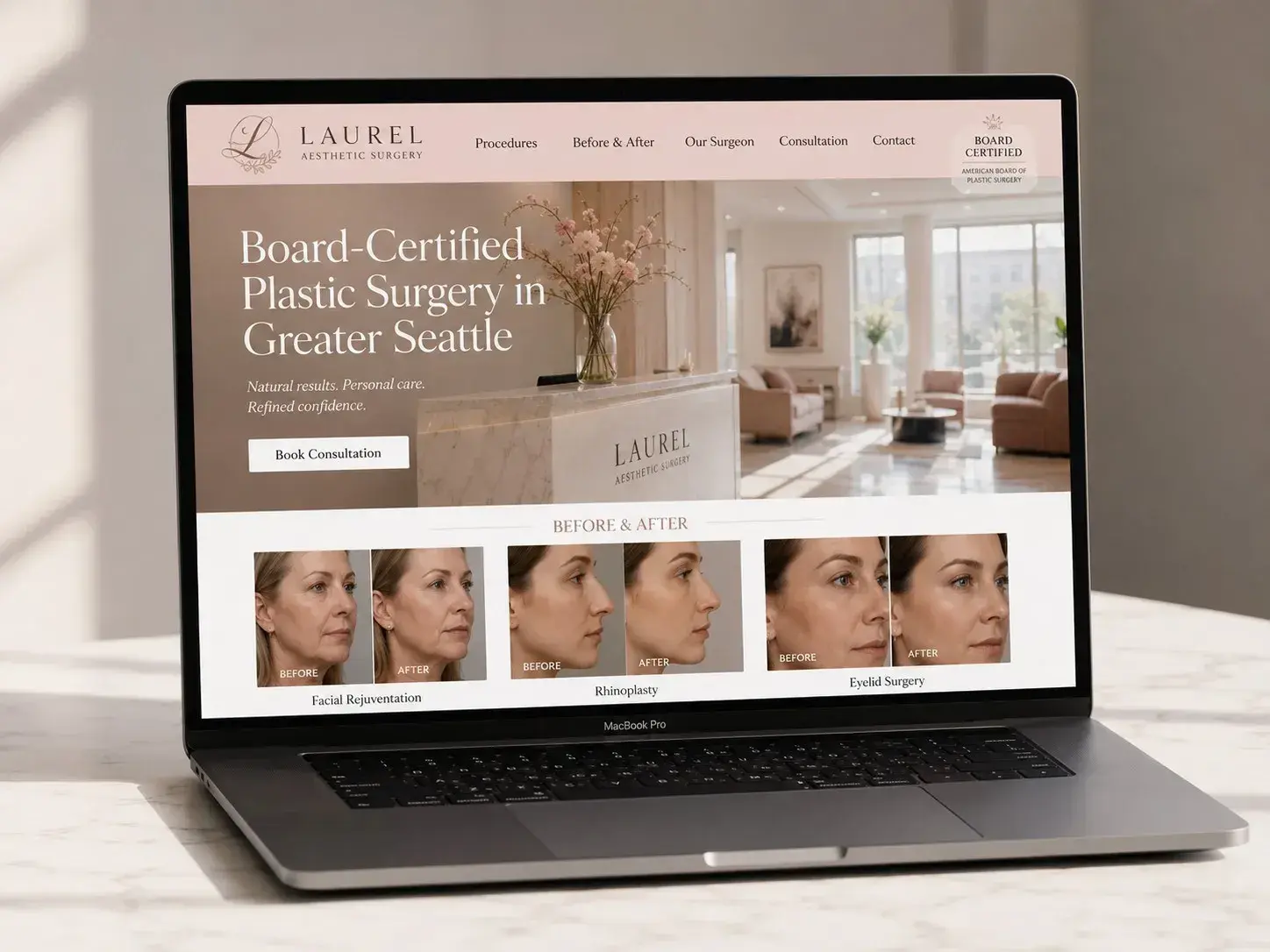
Why Plastic Surgery sites are different.
Plastic surgery is the most image-driven medical category, with before/after galleries doing the bulk of the conversion work. Most templated cosmetic surgery sites either skimp on the gallery (stock images, generic results) or fail to organize it in the way prospects actually browse, by procedure, by patient demographics, by surgeon. The other distinct conversion lever is credentialing: "Board Certified Plastic Surgeon" (ABPS) is meaningfully different from "cosmetic surgeon" or "aesthetic medicine practitioner," and prospects who've done any research know the distinction. Surfacing ABPS certification explicitly (with the credential lookup link) builds trust the generic competition can't, and I build the consultation booking and contact paths so you can see which procedure pages and galleries are actually driving booked consultations. Financing partner integration (CareCredit, Alphaeon, PatientFi) on procedure pages is the third lever, most cosmetic decisions hinge on the monthly-payment question, and addressing it on the procedure page itself keeps deals moving.

What goes into a great website for plastic surgeons.
- Before / after gallery organized by procedure and patient profile
- Filterable by procedure (rhinoplasty, breast augmentation, tummy tuck, facelift) and by patient profile (age range, body type) so prospects can find results matching their situation. The single highest-converting element for cosmetic surgery.
- Board-certified credentials displayed prominently
- ABPS certification with credential-lookup link, fellowship credentials, hospital affiliations. The ABPS vs non-ABPS distinction matters to researched prospects and surfacing it is a direct trust lever.
- Procedure-specific landing pages
- Each procedure gets a dedicated page with realistic recovery timeline, typical cost range, candidate criteria, surgeon's approach, and procedure-specific before/afters. Surface for the long-tail procedure-and-city queries that convert.
- Financing partner integration
- CareCredit, Alphaeon Credit, PatientFi banners and pre-qual links on every procedure page. Most cosmetic decisions hinge on the monthly-payment question, addressing it on the procedure page keeps deals moving.
- Consultation booking with deposit option
- Online consultation booking. Some clinics charge a consultation fee credited toward the procedure; the booking flow should handle that cleanly without making it feel like a paywall.
- Privacy-aware patient stories
- Patient testimonials and review aggregation with explicit consent management, some patients are happy to be named and photographed, others want their before/after used anonymously. The site has to handle both.
How I approach Plastic Surgery web design.
Every site I build runs on the same modern, server-rendered stack, the same one powering chegtech.com. That's deliberate. The default for local-business sites is WordPress with a page builder, and the builder layer tanks Core Web Vitals and ceiling SEO. Custom-built means faster, cleaner, and built to rank from day one.
A new website doesn't earn Google's full trust overnight. Search engines tend to be cautious with newer domains for the first few months, so I build the foundation correctly from day one, with clean structure, proper SEO, and the right signals in place. That way, as your domain ages and gains authority, your site is already positioned to climb instead of playing catch-up.
SEO + AEO Built In
- Local SEOGBP-aligned content, NAP consistency, citation cleanup, neighborhood pages
- Technical SEOCore Web Vitals in the 90s, semantic HTML, structured data, clean sitemap
- AEO OptimizationFAQ schema, AI-Overview-ready content, ChatGPT/Perplexity citation patterns
- Mobile-First Design70%+ of service searches are mobile, so every page is tested at phone width first
- Schema.org MarkupLocalBusiness, FAQPage, Service schema embedded site-wide
- Conversion TrackingGA4 + GTM + form-submission events wired to real outcomes, not vanity clicks
Tech Stack
- Next.jsReact framework, server-rendered
- AstroContent-first static sites
- TypeScriptType-safe JavaScript
- Tailwind CSSUtility-first styling
- Sveltia CMSGit-based content editor
- NetlifyEdge hosting & deploys
- Cloudflare TurnstileForm spam protection
- Schema.org JSON-LDStructured data for search + AI
- Google Tag ManagerAnalytics + conversion events
- SE RankingKeyword research + rank tracking
- BrightLocalLocal rank tracking + citation audits
- GitHubVersion control + deploy triggers
Image-first, credential-anchored conversion
Plastic surgery is a visual-first conversion like the IGo Green rebuild, where the before-and-after gallery is the primary lever and real photography beats stock every time. I would lead with ABPS credentialing and gallery depth for a Greater Seattle solo or small-group practice competing against the national chains and the medspa category creep.
The Greater Seattle Plastic Surgery market.
Greater Seattle's plastic surgery market concentrates in Bellevue (the Eastside affluence belt), Seattle proper (First Hill medical corridor and Capitol Hill), and Tacoma (the South Sound submarket). Competition includes high-profile solo ABPS practices, multi-surgeon group practices, and the growing medspa category encroaching on aesthetic procedures. Credentialing (ABPS vs everything else) is the most defensible differentiator in this market.
More on the Eastside marketCommon Plastic Surgery web design questions.
Tiered consent: some patients sign full release allowing name and face, others sign anonymous release allowing the photos without identification. The gallery infrastructure has to support both, plus a revocation workflow if a patient later changes their mind. This is non-negotiable and not optional, getting it wrong creates real legal exposure.
A custom practice site starts at $2,500 one-time, with no retainer required to launch. Hosting and maintenance are $150 a month, and optional SEO or content retainers run $350 to $850 a month for ongoing procedure-and-city ranking work. Most sites launch in 2 to 3 weeks; price scales with gallery depth, the number of procedure pages, and financing integration. See pricing →
Yes, front-end integration with CareCredit, Alphaeon Credit, and PatientFi for pre-qual buttons, monthly-payment calculators, and banner display on procedure pages. Full credit decisioning runs through the financing partner's platform.
If your practice charges a consultation fee (often credited toward the procedure), the booking flow can handle the payment via Stripe or similar, typically as a deposit that's refunded or credited at the consultation. The framing matters: "securing your consultation slot" reads better than "paying for a consultation." See pricing →
What clients say about working with me.
5.0 rating across 14 Google reviews.
It's always a privilege to work with someone who truly knows what they're doing and takes pride in their profession. I needed a website for my business and reached out to Jonah from Chegtech. From the start, I was impressed by the quality of his work, his efficiency, and his professionalism. Jonah handled everything in a timely manner and consistently showed respect for my time throughout the entire process. His skills, attention to detail, and commitment to delivering excellent results made the experience smooth and stress-free. I'm extremely satisfied with the outcome and would highly recommend him to anyone looking for a reliable and talented web developer.
Natalya C.
Real estate client
Amazing Service offered, ChegTech responded very quickly and helped me get my website up and running. Offered lots of help so would definitely recommend to business/individual looking to get a professional website for a good price.
Joshua S.
Verified Google review
Some of the best websites I've ever seen in my life. Wish I could start more things and companies just so I could get some more of his sites.
Lawrence R.
Verified Google review

Every Plastic Surgery site is designed, coded, and optimized by Jonah Chegarnov. No subcontractors, no account managers, no handoffs. Founder of ChegTech · Web Designer & SEO in Auburn, WA.
More about JonahReady to talk about your Plastic Surgery project?
Project-by-project. No retainers, no contracts. Starting at $2,500.
ChegTech · Auburn, WA 98001 · serving Greater Seattle · (206) 940-8704 · jonah@chegtech.com