
Website for senior living communities the whole family trusts.
A website for senior living communities has to win over the adult child doing the research, who is usually the real decision-maker. That first look has to feel warm and reassuring enough to trust with a parent, so I build for exactly that emotional read, backed by a site that stays visible as it builds authority. It encourages satisfied families to leave reviews, so your reputation keeps growing.
By Jonah Chegarnov · Updated
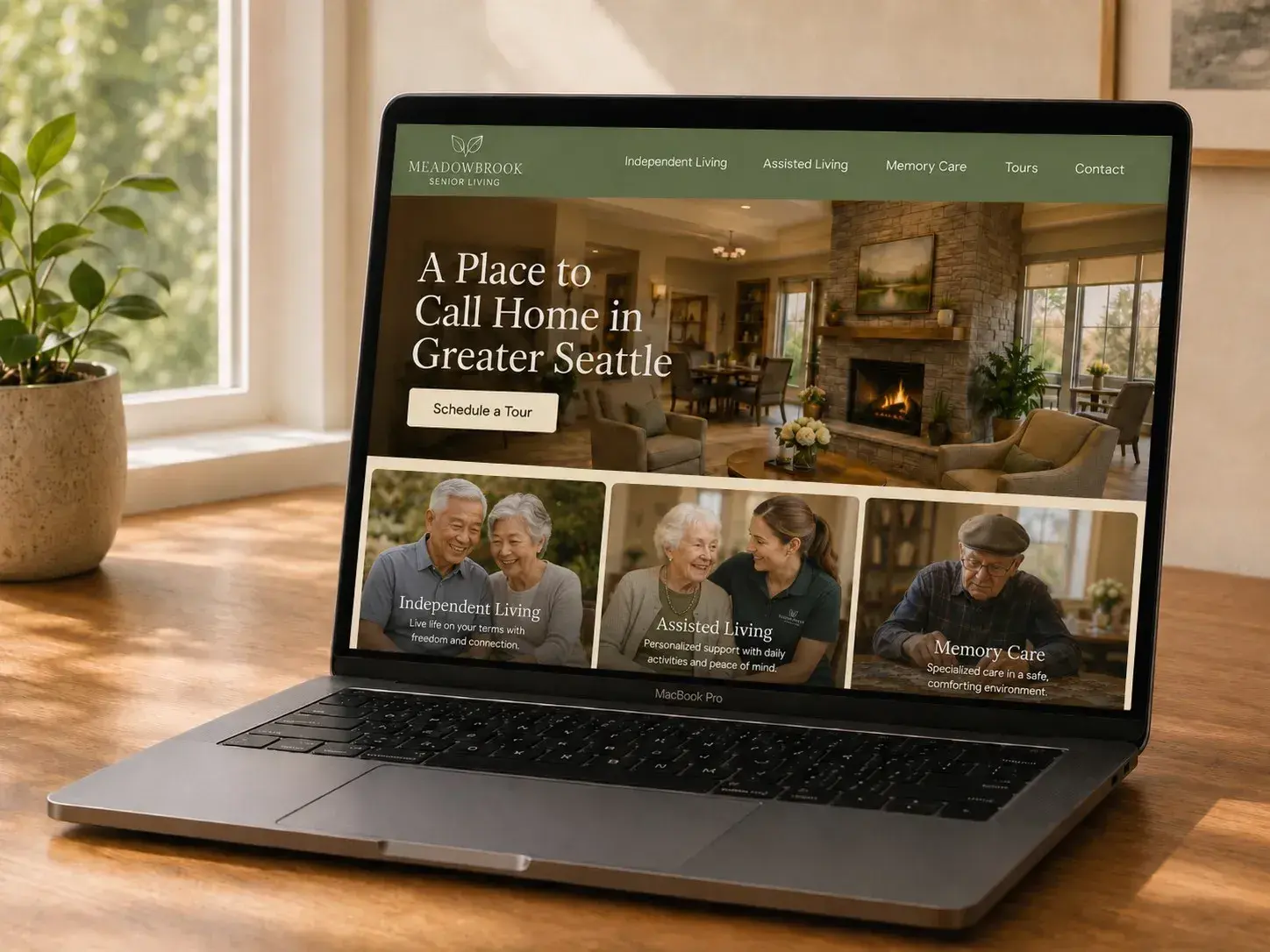
Why Senior Living sites are different.
Senior living websites are unusual because the visitor is almost never the prospective resident. It's an adult child (often the daughter, almost always under time pressure, often during a parent's hospitalization or rapid decline) researching for their parent. That changes everything about the site. The copy needs to educate on level-of-care distinctions (independent living vs assisted living vs memory care vs skilled nursing) because most family researchers don't know the differences. Virtual tours are disproportionately valuable because the adult child may live out-of-state and can't visit immediately. Pricing transparency is contested in the industry (most communities prefer "contact us for pricing") but the families who've done any research notice and trust transparent communities more. The tour-scheduling experience is the conversion event; everything else supports it.
Sources: National Institute on Aging, long-term care facility types
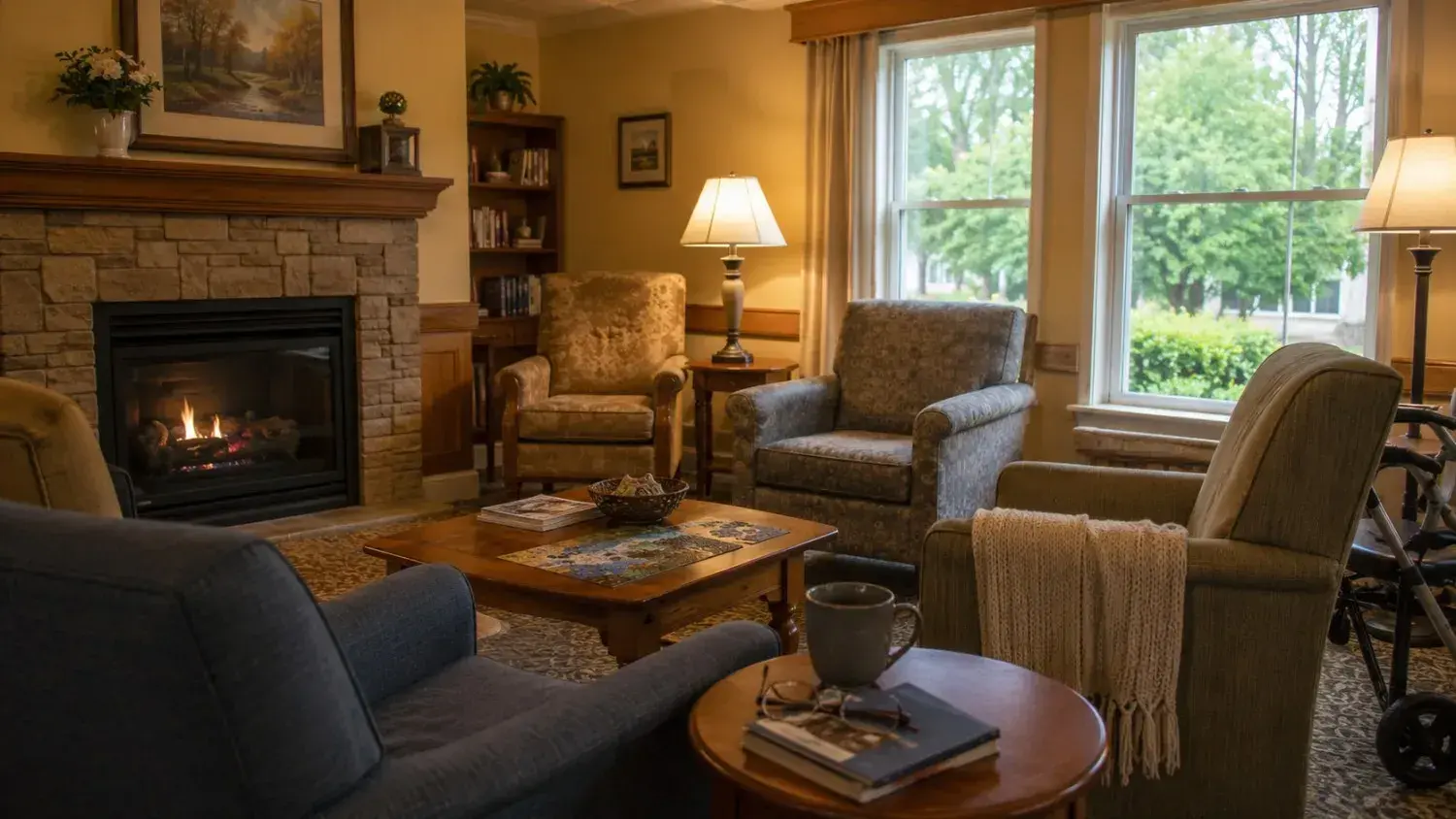
What goes into a great website for senior living communities.
- Level-of-care education at the top, built to be readable for older eyes
- Independent living, assisted living, memory care, skilled nursing, explained in plain language with the typical resident profile for each. I build with larger text, high-contrast type, and clear tap targets in mind so both the adult child and the parent reading over their shoulder can use it comfortably. Most family researchers don't know the distinctions; the site that teaches them earns trust.
- Virtual tour integration
- Embedded 360° or video tours of common spaces, sample apartments, dining, and memory care unit if applicable. Critical for out-of-state adult children who can't visit immediately.
- Pricing transparency where competitively possible
- At minimum a starting-from range per care level. Full transparency (specific apartment pricing) where the operator is comfortable. Families who've researched 5+ communities reward the transparent ones.
- Schedule-a-tour as the primary CTA
- One-tap booking, calendar integration with the community relations team. Distinct booking for in-person vs virtual tours. Tour scheduling is the conversion event.
- Family-decision tools and resources
- Downloadable checklists, financial planning guides, Medicaid/VA benefits education content. The content that family researchers actually save and reference during a multi-week decision.
- Staff and resident stories with consent
- Real staff bios with tenure, real (consented) resident stories, real photos of community life, alongside the genuine family reviews already shown on this page. The social proof that stock senior-living imagery cannot do, and the thing an anxious daughter trusts before she ever schedules a tour.
How I approach Senior Living web design.
Every site I build runs on the same modern, server-rendered stack, the same one powering chegtech.com. That's deliberate. The default for local-business sites is WordPress with a page builder, and the builder layer tanks Core Web Vitals and ceiling SEO. Custom-built means faster, cleaner, and built to rank from day one.
A new website doesn't earn Google's full trust overnight. Search engines tend to be cautious with newer domains for the first few months, so I build the foundation correctly from day one, with clean structure, proper SEO, and the right signals in place. That way, as your domain ages and gains authority, your site is already positioned to climb instead of playing catch-up.
SEO + AEO Built In
- Local SEOGBP-aligned content, NAP consistency, citation cleanup, neighborhood pages
- Technical SEOCore Web Vitals in the 90s, semantic HTML, structured data, clean sitemap
- AEO OptimizationFAQ schema, AI-Overview-ready content, ChatGPT/Perplexity citation patterns
- Mobile-First Design70%+ of service searches are mobile, so every page is tested at phone width first
- Schema.org MarkupLocalBusiness, FAQPage, Service schema embedded site-wide
- Conversion TrackingGA4 + GTM + form-submission events wired to real outcomes, not vanity clicks
Tech Stack
- Next.jsReact framework, server-rendered
- AstroContent-first static sites
- TypeScriptType-safe JavaScript
- Tailwind CSSUtility-first styling
- Sveltia CMSGit-based content editor
- NetlifyEdge hosting & deploys
- Cloudflare TurnstileForm spam protection
- Schema.org JSON-LDStructured data for search + AI
- Google Tag ManagerAnalytics + conversion events
- SE RankingKeyword research + rank tracking
- BrightLocalLocal rank tracking + citation audits
- GitHubVersion control + deploy triggers
Family-research flow, not prospect-as-decision-maker
Senior living is a high-stakes, trust-first decision made mostly by adult children, so I would design the whole site around that family-research flow. The approach scales the medical-practice credentialing logic, licensing, care levels, and real photography surfaced before any conversion, for an independent or small-group community competing against the national chains on local SEO.
The Greater Seattle Senior Living market.
Greater Seattle's senior living market is dominated by national operators (Brookdale, Holiday Retirement, Sunrise) in the dense suburban corridors. Independent and faith-based communities concentrate in Federal Way, Auburn, Puyallup, Tacoma, and the Eastside (Bellevue, Bothell). Demographic pressure is significant, the boomer generation is aging into senior-living-eligibility right now, and the demand curve outpaces new construction in most submarkets.
More on the South King County marketCommon Senior Living web design questions.
At minimum a starting-from range per care level so prospects can self-qualify before scheduling a tour. Full transparency (specific apartment pricing posted) is contested in the industry (operators worry about being undercut) but the families who've researched multiple communities specifically reward transparent operators because the alternative is calling 8 communities for prices and giving up on the ones that won't say.
Yes, distinct calendar booking for in-person and virtual tours, with the virtual tours running on Zoom, Google Meet, or whatever your community relations team prefers. The virtual tour scheduling is what captures the daughter-in-Phoenix who can't fly to Seattle next week but is making decisions for her parent here.
A custom community site starts at $2,500 one-time, with no retainer required to launch. Hosting and maintenance are $150 a month, and optional SEO or content retainers run $350 to $850 a month if you want ongoing family-search visibility. Most sites launch in 2 to 3 weeks; price scales with virtual-tour integration, level-of-care page depth, and the resource library. See pricing →
Educational content explaining what each covers (and doesn't) for senior living (Medicaid for skilled nursing only, Medicare for short-term rehabilitation only, VA Aid & Attendance for veterans) is one of the most-referenced pieces of content on a senior living site. Family researchers genuinely don't know how this works and the site that teaches them well earns the visit. See pricing →
What clients say about working with me.
5.0 rating across 14 Google reviews.
Loved working with Jonah. Website was phenomenal and I was able to get all the features I wanted.
Nathan M.
Verified Google review
Very good job at making websites I very recommend him for all works.
Lucas M.
Verified Google review
ChegTech was the best fit for my Business! Took every detail into consideration, and helped me turn my vision into a reality. I dreaded the thought of needed to get a website built for my HVAC Business, and between the hundreds of spam calls and pushy sales rep. I took the time to research and call a few Web designers, ChegTech was the perfect fit. Not only are they local to me, but they made sure everything was done to my satisfaction. Love the Website, and will continue to recommend ChegTech to everyone I come across!
Dennis S.
Owner, Pinnacle Air Control

Every Senior Living site is designed, coded, and optimized by Jonah Chegarnov. No subcontractors, no account managers, no handoffs. Founder of ChegTech · Web Designer & SEO in Auburn, WA.
More about JonahReady to talk about your Senior Living project?
Project-by-project. No retainers, no contracts. Starting at $2,500.
ChegTech · Auburn, WA 98001 · serving Greater Seattle · (206) 940-8704 · jonah@chegtech.com