
Website for landscaping companies that sells both sides of the truck.
A website for landscaping companies has to sell both the recurring maintenance and the high-margin design work. I build a site that shows off your craftsmanship right away and presents both sides of the business clearly, so visitors immediately picture the result they want. It ranks well while climbing further as it builds authority, loads fast on the phone where most homeowners are searching, and surfaces real Google reviews on the page, so your reputation keeps building season after season.
By Jonah Chegarnov · Updated
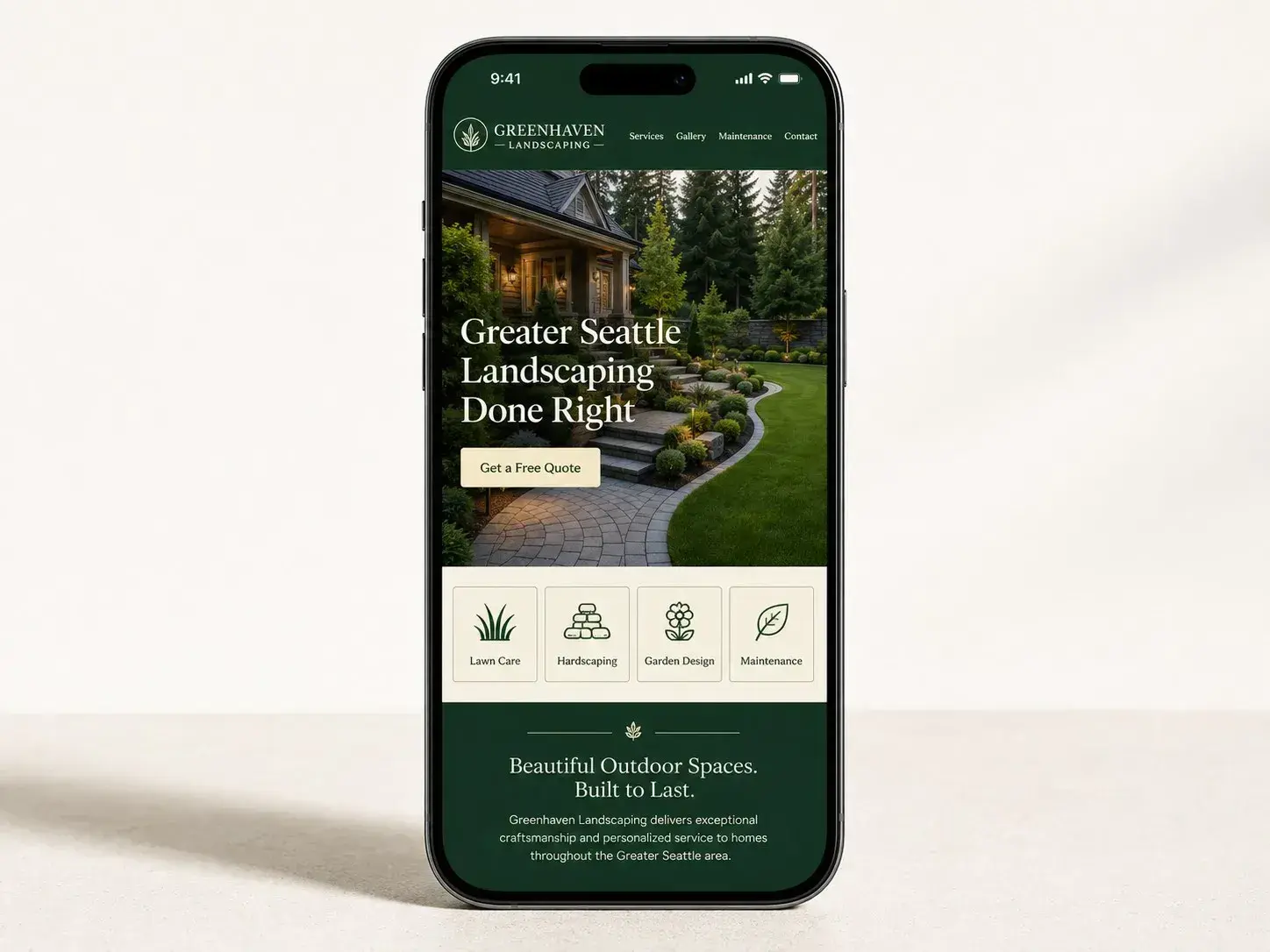
Why Landscaping sites are different.
Landscaping is two distinct businesses sharing one truck. Recurring maintenance (weekly mowing, fertilization programs, seasonal cleanup) is the predictable revenue and the long-term LTV play. One-off design and install work (patios, retaining walls, new beds) is higher per-job revenue with longer sales cycles and heavier photo-driven conversion. Most landscaper sites blend the two into a single "services" page and convert weakly at both. Splitting the architecture, distinct landing pages, distinct CTAs, distinct intake forms (recurring service starts with a property type and ZIP; one-off install starts with a project description), moves the needle on both fronts. The other PNW-specific thing worth designing for is regional plant expertise; "native PNW landscape design" outranks "landscape design" for the customers who specifically care.
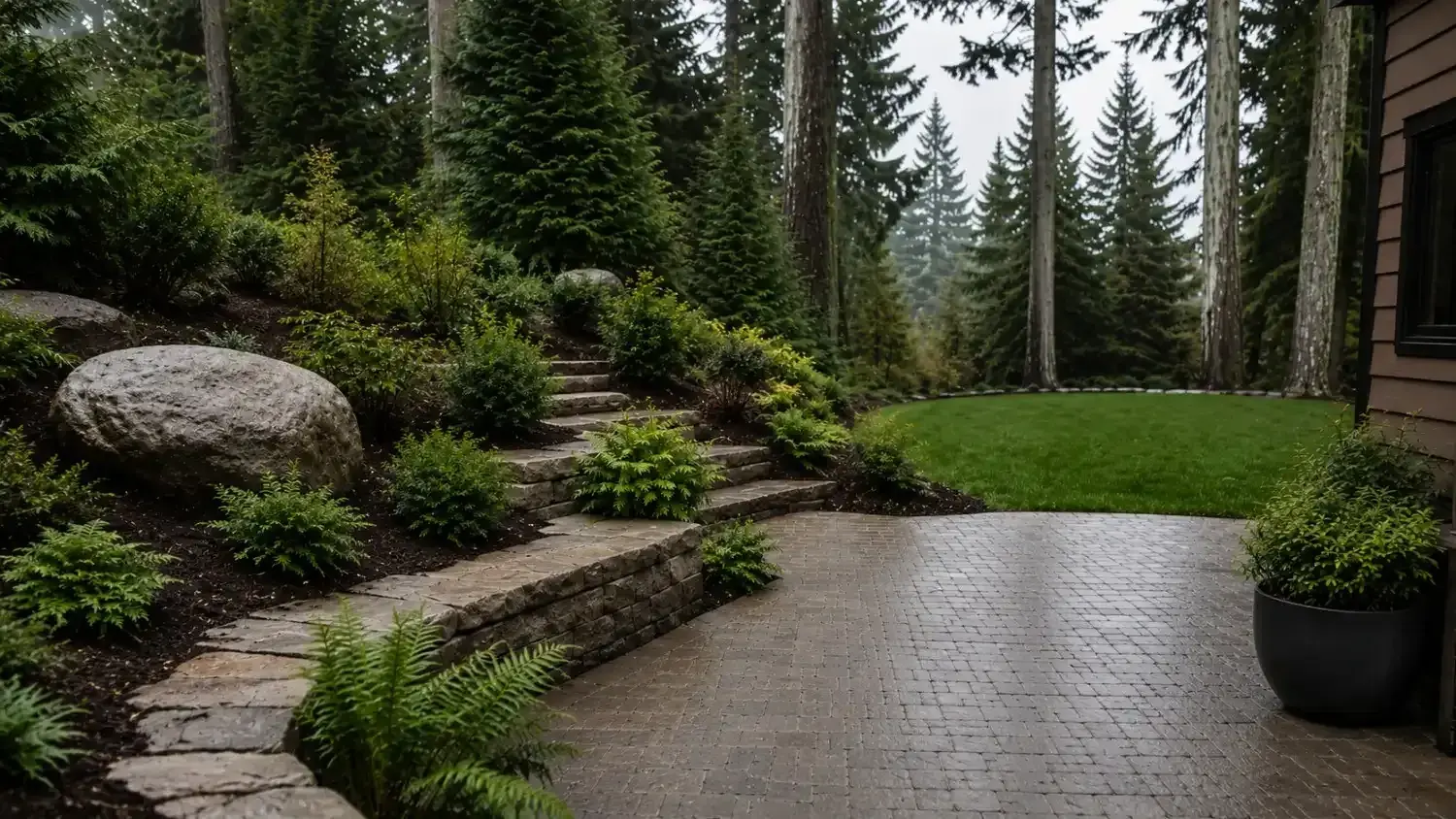
What goes into a great website for landscaping companies.
- Recurring vs one-off intake split
- Distinct CTAs and forms. Recurring service starts with property size and frequency; one-off install starts with a project description. Trying to qualify both through one generic contact form loses leads on both sides. Both forms are mobile-first, since most homeowners find a landscaper on their phone, and a form that's fast and thumb-friendly on a small screen is the difference between a captured lead and a bounce.
- Seasonal photo gallery
- Spring transformations, summer maturity, fall color, winter structure. PNW landscaping looks different every quarter, and showing that range signals real local expertise. Before-and-after sets do the heavy lifting on the high-margin install work, a homeowner who can picture the finished patio or planting scheme is most of the way to booking before they call.
- Hardscape vs softscape page split
- Patios, retaining walls, paver driveways, and fire features convert differently from lawn care and planting. Dedicated pages for each pull their own search intent.
- Regional plant expertise as a trust signal
- Pacific Northwest native species pages, drought-tolerant alternatives, deer-resistant options, the specificity that homeowners doing real research notice.
- Service-area accuracy
- Most landscapers can't profitably travel beyond a 30-minute radius from their yard. Service-area schema and city pages that match reality, not aspiration.
- Seasonal CTAs and content cadence
- Spring cleanup banners in February, fall leaf removal banners in October, holiday lighting in November. The seasonality is the search opportunity; ignoring it leaves money on the table.
How I approach Landscaping web design.
Every site I build runs on the same modern, server-rendered stack, the same one powering chegtech.com. That's deliberate. The default for local-business sites is WordPress with a page builder, and the builder layer tanks Core Web Vitals and ceiling SEO. Custom-built means faster, cleaner, and built to rank from day one.
A new website doesn't earn Google's full trust overnight. Search engines tend to be cautious with newer domains for the first few months, so I build the foundation correctly from day one, with clean structure, proper SEO, and the right signals in place. That way, as your domain ages and gains authority, your site is already positioned to climb instead of playing catch-up.
SEO + AEO Built In
- Local SEOGBP-aligned content, NAP consistency, citation cleanup, neighborhood pages
- Technical SEOCore Web Vitals in the 90s, semantic HTML, structured data, clean sitemap
- AEO OptimizationFAQ schema, AI-Overview-ready content, ChatGPT/Perplexity citation patterns
- Mobile-First Design70%+ of service searches are mobile, so every page is tested at phone width first
- Schema.org MarkupLocalBusiness, FAQPage, Service schema embedded site-wide
- Conversion TrackingGA4 + GTM + form-submission events wired to real outcomes, not vanity clicks
Tech Stack
- Next.jsReact framework, server-rendered
- AstroContent-first static sites
- TypeScriptType-safe JavaScript
- Tailwind CSSUtility-first styling
- Sveltia CMSGit-based content editor
- NetlifyEdge hosting & deploys
- Cloudflare TurnstileForm spam protection
- Schema.org JSON-LDStructured data for search + AI
- Google Tag ManagerAnalytics + conversion events
- SE RankingKeyword research + rank tracking
- BrightLocalLocal rank tracking + citation audits
- GitHubVersion control + deploy triggers
Two-business architecture, one site
A landscaping site has to do two jobs at once, sell recurring maintenance and showcase one-off installs, so I would separate those intakes from the start, the same project-page-versus-service-page split that worked on the Velare Remodeling rebuild. The gallery would be built around real Pierce and South King County projects, with the maintenance and install keywords targeted distinctly because they convert on different logic.
The Greater Seattle Landscaping market.
Greater Seattle landscaping demand peaks in two distinct waves: March-through-May for spring cleanup and new bed install, and October-through-November for fall cleanup and bulb planting. Active markets: Auburn, Kent, Federal Way, Puyallup, Bonney Lake, Sumner, established residential corridors with mature properties that need maintenance, and growing developments that need install. PNW-specific plant knowledge (deer pressure in Bonney Lake, clay soils in South Hill) is a real trust signal.
More on the South King County marketCommon Landscaping web design questions.
Yes, but with separate landing pages, separate CTAs, and separate intake forms. The customer journeys are different enough that one merged "services" page converts weakly on both. The split is what makes the site work for both lines of business simultaneously.
A full custom build is a flat $2,500 one-time, with hosting and maintenance at $150 a month. If you want me driving the local SEO and seasonal content that fills your spring and fall schedules, that's a $350 to $850 monthly retainer, optional and separate. No per-page upsells, and the recurring-vs-one-off split is part of the base build, not an add-on. See pricing →
Yes, date-aware banner logic shows spring cleanup CTAs February through April, fall cleanup October through November, and holiday lighting November through December automatically. No manual content management required to surface the right seasonal call-to-action.
Three to four weeks. The seasonal photo library is the longest pole, landscapers benefit most from photos that span the full year cycle, which sometimes means delaying launch to capture a missing season. We work around it. See pricing →
What clients say about working with me.
5.0 rating across 14 Google reviews.
Loved working with Jonah. Website was phenomenal and I was able to get all the features I wanted.
Nathan M.
Verified Google review
Very good job at making websites I very recommend him for all works.
Lucas M.
Verified Google review
ChegTech was the best fit for my Business! Took every detail into consideration, and helped me turn my vision into a reality. I dreaded the thought of needed to get a website built for my HVAC Business, and between the hundreds of spam calls and pushy sales rep. I took the time to research and call a few Web designers, ChegTech was the perfect fit. Not only are they local to me, but they made sure everything was done to my satisfaction. Love the Website, and will continue to recommend ChegTech to everyone I come across!
Dennis S.
Owner, Pinnacle Air Control

Every Landscaping site is designed, coded, and optimized by Jonah Chegarnov. No subcontractors, no account managers, no handoffs. Founder of ChegTech · Web Designer & SEO in Auburn, WA.
More about JonahReady to talk about your Landscaping project?
Project-by-project. No retainers, no contracts. Starting at $2,500.
ChegTech · Auburn, WA 98001 · serving Greater Seattle · (206) 940-8704 · jonah@chegtech.com