
Website for real estate agents who'd rather own their search presence.
A website for real estate agents should let you own your search presence instead of renting it from the big portals. Buyers and sellers size you up fast, so your site has to look sharper than the agent down the street the moment it loads, and it ranks for the neighborhood searches that actually convert, climbing further as it builds authority. It also encourages happy clients to leave reviews, so you build real equity in your reputation.
By Jonah Chegarnov · Updated
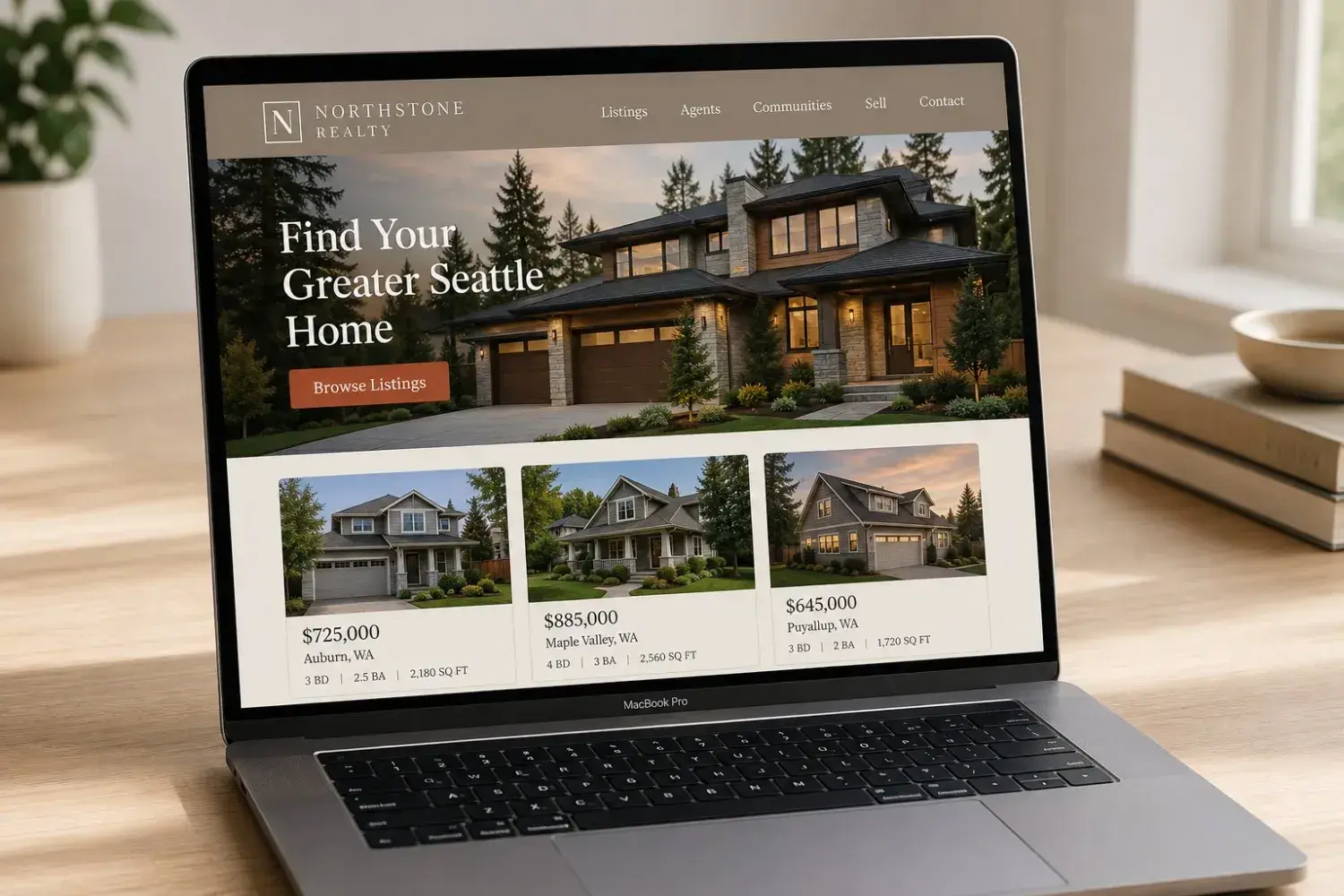
Why Real Estate sites are different.
Real estate agent SEO is in an unusual position: the agent will never outrank Zillow, Redfin, or Realtor.com on the listing search queries themselves. The lane that actually converts is neighborhood-and-lifestyle content, "living in Sammamish vs Issaquah," "is it worth buying in Auburn 2026," "first-time buyer guide for Federal Way condos." Those queries don't have a Zillow page that perfectly satisfies the intent, and a real agent with local knowledge can dominate them. The second move is the buyer/seller intake split: buyer and seller leads have completely different qualification needs, and a single "contact me" form converts weakly on both. IDX integration is a real consideration but it's secondary; agents over-invest in IDX feeds and under-invest in the neighborhood content that actually drives the leads.
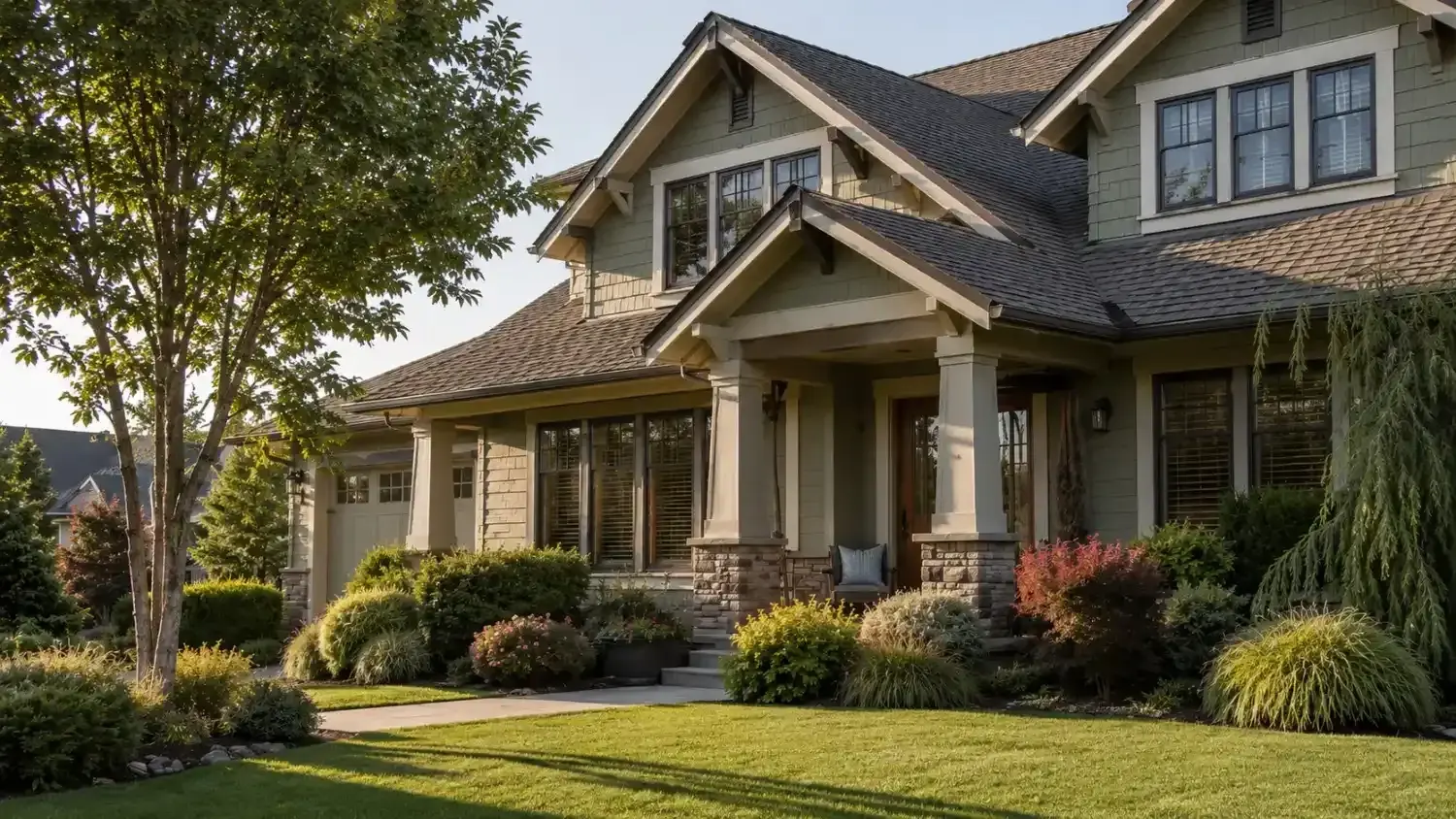
What goes into a great website for real estate agents.
- Neighborhood-and-lifestyle landing pages
- Substantive pages for each neighborhood the agent actively serves, schools, commute, character, recent sales context. The content Zillow can't replicate and that converts on long-tail searches.
- Buyer vs seller intake split
- Distinct landing pages and intake forms. Buyer intake captures price range, timeline, neighborhoods of interest. Seller intake captures address, motivation, timeline. The qualification needs are different enough that one form serves neither.
- IDX integration where appropriate
- IDX feed integration (NWMLS for Greater Seattle) if the agent wants listings on-site. Worth doing for SEO of "homes for sale in [neighborhood]", but the neighborhood content drives more leads than the listings themselves.
- Real listing schema for featured properties
- RealEstateListing schema for the agent's own active listings, feeds Google's real estate rich results and gives the listings independent SEO weight beyond the IDX feed.
- Agent profile schema with reviews
- Person schema with credentials, brokerage affiliation, years in market, and aggregated Zillow/Google review data. AI Overview surfaces specific agents on "best [neighborhood] agent" queries.
- Market context content
- Quarterly market updates by neighborhood, blog posts on local development and zoning changes, first-time buyer guides for specific price points. Builds topical authority Zillow can't match.
How I approach Real Estate web design.
Every site I build runs on the same modern, server-rendered stack, the same one powering chegtech.com. That's deliberate. The default for local-business sites is WordPress with a page builder, and the builder layer tanks Core Web Vitals and ceiling SEO. Custom-built means faster, cleaner, and built to rank from day one.
A new website doesn't earn Google's full trust overnight. Search engines tend to be cautious with newer domains for the first few months, so I build the foundation correctly from day one, with clean structure, proper SEO, and the right signals in place. That way, as your domain ages and gains authority, your site is already positioned to climb instead of playing catch-up.
SEO + AEO Built In
- Local SEOGBP-aligned content, NAP consistency, citation cleanup, neighborhood pages
- Technical SEOCore Web Vitals in the 90s, semantic HTML, structured data, clean sitemap
- AEO OptimizationFAQ schema, AI-Overview-ready content, ChatGPT/Perplexity citation patterns
- Mobile-First Design70%+ of service searches are mobile, so every page is tested at phone width first
- Schema.org MarkupLocalBusiness, FAQPage, Service schema embedded site-wide
- Conversion TrackingGA4 + GTM + form-submission events wired to real outcomes, not vanity clicks
Tech Stack
- Next.jsReact framework, server-rendered
- AstroContent-first static sites
- TypeScriptType-safe JavaScript
- Tailwind CSSUtility-first styling
- Sveltia CMSGit-based content editor
- NetlifyEdge hosting & deploys
- Cloudflare TurnstileForm spam protection
- Schema.org JSON-LDStructured data for search + AI
- Google Tag ManagerAnalytics + conversion events
- SE RankingKeyword research + rank tracking
- BrightLocalLocal rank tracking + citation audits
- GitHubVersion control + deploy triggers
Neighborhood depth beats Zillow on long-tail
The way to beat Zillow and HomeAdvisor is to go deeper on local than a national platform structurally can, so I would build neighborhood-level content authority as the core of the site. The buyer and seller flows would sit on top of hyper-local neighborhood pages for a Greater Seattle agent, capturing the long-tail searches the big platforms ignore, the same city-authority play behind the Pinnacle Air Control climb.
The Greater Seattle Real Estate market.
Greater Seattle real estate splits into distinct micro-markets that reward neighborhood-specific content. Eastside (Bellevue, Sammamish, Issaquah, Redmond) has tech-driven demand and is the highest-end market. Seattle proper varies block by block. South King (Auburn, Kent, Federal Way, Renton) is the first-time-buyer affordability lane. Pierce (Tacoma, Puyallup, Lakewood) trends investment-property heavy. Each market rewards different content angles.
More on the Eastside marketCommon Real Estate web design questions.
The build is $2,500 one-time, hosting and maintenance $150 a month. The neighborhood-and-lifestyle content that actually beats Zillow on long-tail searches is an SEO and content retainer at $350 to $850 a month, priced to how many neighborhoods you're claiming. Most agent sites launch in 2 to 3 weeks. See pricing →
Buyer leads need price range, timeline, neighborhoods, and financing status. Seller leads need address, motivation, equity position, and timeline. A single generic "contact me" form qualifies neither well and converts weakly. Split forms convert at meaningfully higher rates because the questions are relevant to the actual conversation.
For the neighborhoods you actually do real volume in, yes, substantive pages with real local knowledge outrank Zillow's templated neighborhood pages. For neighborhoods you've done one or two deals in, a single "Greater [submarket]" page covering the cluster is better than a thin page per micro-neighborhood.
Different by lane. Buyer: "Get a free buyer consultation" or "Schedule a property tour." Seller: "Get a free home value estimate", and actually provide one with a callback, not just a generic AVM widget. The CTA has to match the intent the page is serving. See pricing →
What clients say about working with me.
5.0 rating across 14 Google reviews.
ChegTech, did a fantastic job for glass installation company. Super easy to work with, would highly recommend for anyone looking to get a website done right. Will use them again for any future business endeavours.
Tima C.
Owner, IGo Green
I had an amazing experience working with this website developer! From start to finish, they were professional, responsive, and incredibly skilled. They took the time to understand exactly what I wanted and turned my vision into a beautiful, modern, and fully functional website. The design was clean and user-friendly, the site runs smoothly on all devices, and everything was completed on time. Communication throughout the project was excellent, and they were always willing to make adjustments and provide helpful suggestions. I highly recommend this developer to anyone looking for high-quality web design and development services. Truly a 5-star experience!
Daniel K.
Owner, Velare Remodeling
It's always a privilege to work with someone who truly knows what they're doing and takes pride in their profession. I needed a website for my business and reached out to Jonah from Chegtech. From the start, I was impressed by the quality of his work, his efficiency, and his professionalism. Jonah handled everything in a timely manner and consistently showed respect for my time throughout the entire process. His skills, attention to detail, and commitment to delivering excellent results made the experience smooth and stress-free. I'm extremely satisfied with the outcome and would highly recommend him to anyone looking for a reliable and talented web developer.
Natalya C.
Real estate client

Every Real Estate site is designed, coded, and optimized by Jonah Chegarnov. No subcontractors, no account managers, no handoffs. Founder of ChegTech · Web Designer & SEO in Auburn, WA.
More about JonahReady to talk about your Real Estate project?
Project-by-project. No retainers, no contracts. Starting at $2,500.
ChegTech · Auburn, WA 98001 · serving Greater Seattle · (206) 940-8704 · jonah@chegtech.com