
Website for veterinary clinics built for emergencies and routine care.
A website for veterinary clinics has to handle both after-hours emergencies and routine care. A worried pet owner needs to feel your warmth and competence the instant they land, so I build a clear, compassionate site structured around both kinds of visit. It ranks well locally and climbs as it builds authority, and it encourages satisfied pet owners to leave reviews, so your reputation builds alongside your visibility.
By Jonah Chegarnov · Updated
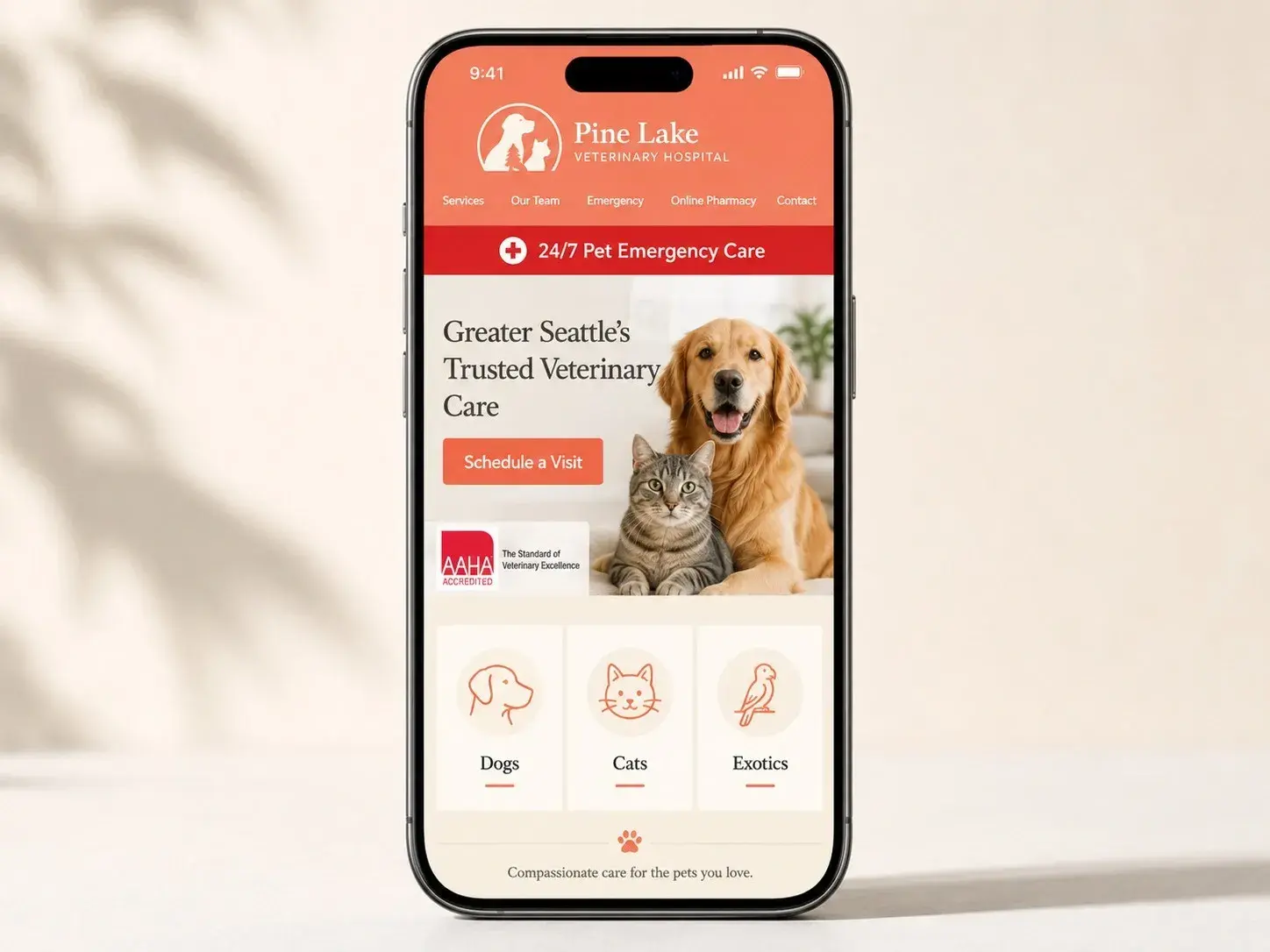
Why Veterinary sites are different.
Veterinary websites have an unusually high emotional content load, pet owners researching for a sick or aging pet are operating on stress, and the site that feels warm and human (real photos of staff cuddling actual patients, not stock golden retrievers) converts at meaningfully higher rates. Beyond the emotional baseline, three structural moves matter. First, the emergency-vs-scheduled split is real: after-hours emergency referrals to a 24/7 emergency hospital have to be clear and instant. Second, pet-type service pages ("dental cleaning for cats Bellevue," "senior dog wellness Auburn") outrank generic vet pages on long-tail queries. Third, the online pharmacy refill flow is a workflow most existing vet sites completely skip, despite the fact that it's the single highest-leverage piece of recurring-revenue infrastructure available to a small-animal practice. AAHA accreditation is a credentialing trust signal worth surfacing prominently when the practice has it.
Sources: American Animal Hospital Association, about accreditation
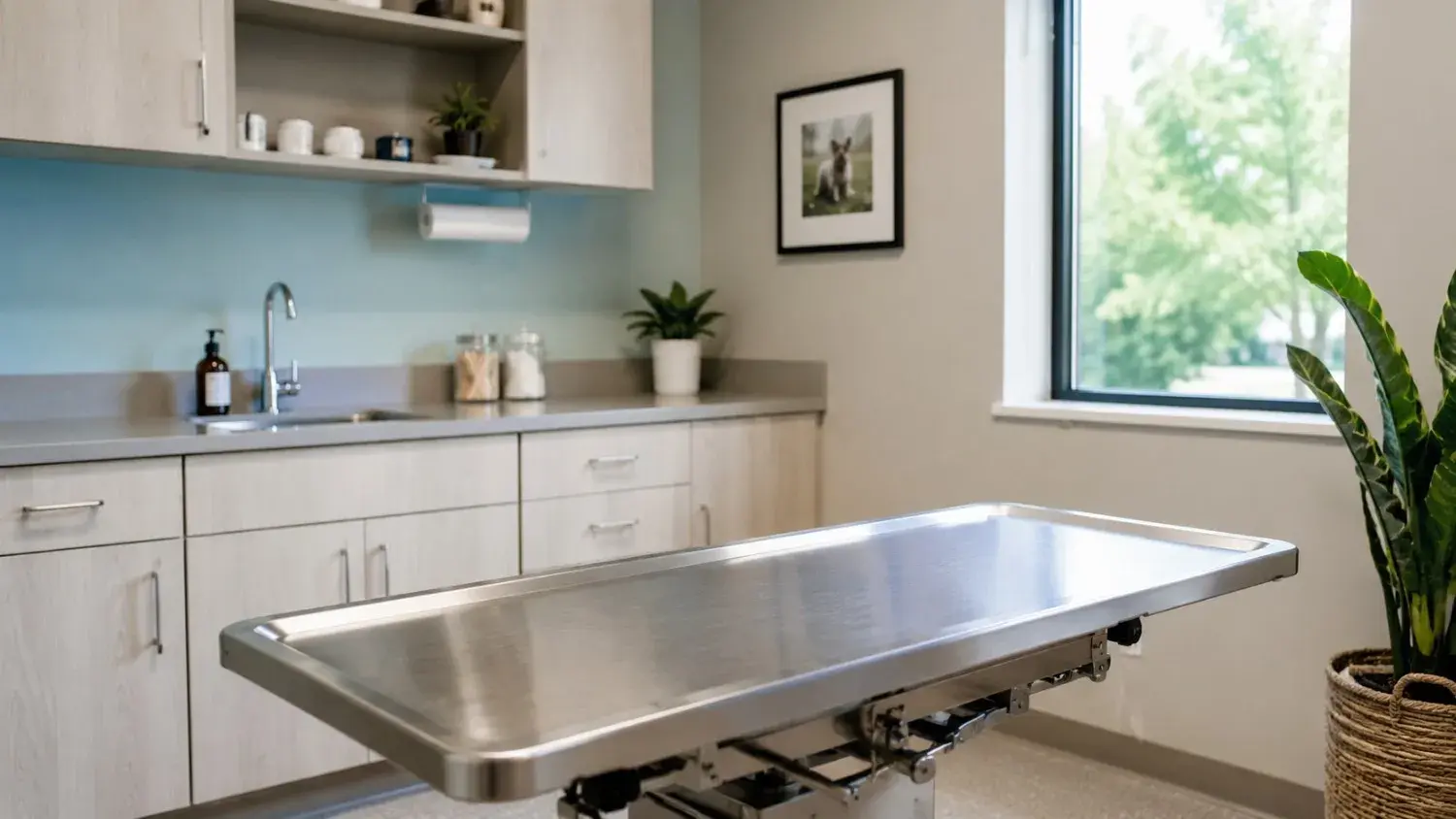
What goes into a great website for veterinary clinics.
- Emergency vs scheduled split with after-hours referral
- Emergency CTA routed to the practice's on-call line during open hours and to the partner emergency hospital after hours. Pet owners under stress need this distinction made for them, not asked about it.
- AAHA accreditation and credentials displayed
- AAHA accreditation badge, Fear Free certification, Cat Friendly Practice certification where applicable, surfaced in the trust strip. Researched owners specifically look for these credentials.
- Pet-type service pages
- Dog wellness, cat wellness, exotic / pocket pets, senior pet care, puppy/kitten care, each its own page with the realistic care timeline and pet-type-specific considerations. Long-tail queries that generic vet pages can't match.
- Online pharmacy refill flow
- Integration with VetSource, Covetrus, or your practice management system's pharmacy module so existing clients can refill prescriptions online without calling. Highest-leverage recurring-revenue workflow most vet sites miss entirely.
- Online appointment scheduling, built for the phone
- One-tap appointment booking that posts to your practice management system, plus new-client intake that accepts vaccine-record PDFs and previous-vet-records upload so the first visit doesn't start with a clipboard. Most owners book from a phone with a pet in their lap, so the whole flow is fast and finger-friendly on mobile, which is where the booking actually happens.
- Real photos of staff with patients
- Stock pet photography is the single most conversion-killing element on most vet sites. Real photos of your actual veterinarians and techs interacting with actual patients (with consent) is the warmth-and-competence signal that converts.
How I approach Veterinary web design.
Every site I build runs on the same modern, server-rendered stack, the same one powering chegtech.com. That's deliberate. The default for local-business sites is WordPress with a page builder, and the builder layer tanks Core Web Vitals and ceiling SEO. Custom-built means faster, cleaner, and built to rank from day one.
A new website doesn't earn Google's full trust overnight. Search engines tend to be cautious with newer domains for the first few months, so I build the foundation correctly from day one, with clean structure, proper SEO, and the right signals in place. That way, as your domain ages and gains authority, your site is already positioned to climb instead of playing catch-up.
SEO + AEO Built In
- Local SEOGBP-aligned content, NAP consistency, citation cleanup, neighborhood pages
- Technical SEOCore Web Vitals in the 90s, semantic HTML, structured data, clean sitemap
- AEO OptimizationFAQ schema, AI-Overview-ready content, ChatGPT/Perplexity citation patterns
- Mobile-First Design70%+ of service searches are mobile, so every page is tested at phone width first
- Schema.org MarkupLocalBusiness, FAQPage, Service schema embedded site-wide
- Conversion TrackingGA4 + GTM + form-submission events wired to real outcomes, not vanity clicks
Tech Stack
- Next.jsReact framework, server-rendered
- AstroContent-first static sites
- TypeScriptType-safe JavaScript
- Tailwind CSSUtility-first styling
- Sveltia CMSGit-based content editor
- NetlifyEdge hosting & deploys
- Cloudflare TurnstileForm spam protection
- Schema.org JSON-LDStructured data for search + AI
- Google Tag ManagerAnalytics + conversion events
- SE RankingKeyword research + rank tracking
- BrightLocalLocal rank tracking + citation audits
- GitHubVersion control + deploy triggers
Emotional warmth + structural workflow = vet conversion
A vet site has to combine warmth and competence in a way the corporate-consolidator templates flatten, so I would lead with the personal-care story over a solid credentialing layer. The build would target local SEO and new-client conversion for an AAHA-accredited Greater Seattle independent competing against Banfield and VCA on exactly the personal care the chains cannot show.
The Greater Seattle Veterinary market.
Greater Seattle's veterinary market is increasingly consolidated, Banfield, VCA, and the Mars-owned consolidators have absorbed many of the previously independent practices. The remaining independents win on personalized continuity, AAHA accreditation positioning, and local SEO that the corporate sites largely don't optimize for. Active independent markets: Auburn, Federal Way, Puyallup, Bonney Lake in the south; Bellevue, Kirkland, Issaquah, Sammamish on the Eastside.
More on the Eastside marketCommon Veterinary web design questions.
Two patterns work. Some practices use VetSource or Covetrus for an outsourced online pharmacy (integration with the practice's existing prescription database). Others run refills through their PMS (eVetPractice, AVImark, ezyVet) with a custom form on the site posting to the PMS via API. Either way, the refill flow lets clients self-serve instead of phoning the front desk.
Yes, and this is non-negotiable for client safety. After-hours hours, the site should make the partner emergency hospital's phone number and address obvious within one tap. Owners searching at 2am with a sick pet need the answer, not your practice's voicemail.
A custom clinic site starts at $2,500 one-time, with no retainer required to launch. Hosting and maintenance are $150 a month, and optional SEO or content retainers run $350 to $850 a month for ongoing local-search work. Most clinics launch in 2 to 3 weeks; price scales with the number of pet-type service pages, the pharmacy-refill flow, and booking integration. See pricing →
No, stock pet photography is the most consistent conversion killer on vet sites. If you don't have a photo library yet, scheduling a 2-hour photo session at the clinic (with consenting clients and their pets) is a higher-ROI use of time than almost anything else you'd do for the site. We can wait on launch to capture the photos if needed. See pricing →
What clients say about working with me.
5.0 rating across 14 Google reviews.
I had an amazing experience working with this website developer! From start to finish, they were professional, responsive, and incredibly skilled. They took the time to understand exactly what I wanted and turned my vision into a beautiful, modern, and fully functional website. The design was clean and user-friendly, the site runs smoothly on all devices, and everything was completed on time. Communication throughout the project was excellent, and they were always willing to make adjustments and provide helpful suggestions. I highly recommend this developer to anyone looking for high-quality web design and development services. Truly a 5-star experience!
Daniel K.
Owner, Velare Remodeling
It's always a privilege to work with someone who truly knows what they're doing and takes pride in their profession. I needed a website for my business and reached out to Jonah from Chegtech. From the start, I was impressed by the quality of his work, his efficiency, and his professionalism. Jonah handled everything in a timely manner and consistently showed respect for my time throughout the entire process. His skills, attention to detail, and commitment to delivering excellent results made the experience smooth and stress-free. I'm extremely satisfied with the outcome and would highly recommend him to anyone looking for a reliable and talented web developer.
Natalya C.
Real estate client
Amazing Service offered, ChegTech responded very quickly and helped me get my website up and running. Offered lots of help so would definitely recommend to business/individual looking to get a professional website for a good price.
Joshua S.
Verified Google review

Every Veterinary site is designed, coded, and optimized by Jonah Chegarnov. No subcontractors, no account managers, no handoffs. Founder of ChegTech · Web Designer & SEO in Auburn, WA.
More about JonahReady to talk about your Veterinary project?
Project-by-project. No retainers, no contracts. Starting at $2,500.
ChegTech · Auburn, WA 98001 · serving Greater Seattle · (206) 940-8704 · jonah@chegtech.com