
website for concrete companies in Greater Seattle
Website for concrete companies built for pour season.
A website for concrete companies has a different job, because concrete is a visual, weather-bound trade and most contractor sites treat it like any other service business. I build sites that do the two things a concrete site actually has to. They show the work, stamped patios, broom-finished driveways, exposed-aggregate walkways, in a gallery that sells the upgrade. And they give homeowners a square-footage ballpark before they call, so the leads that reach you are already qualified and ready for a spring pour. The same site ranks for the finish-and-city searches decorative buyers actually type, and backs it up with real Google reviews on the page, so the qualified leads keep coming.
By Jonah Chegarnov · Updated
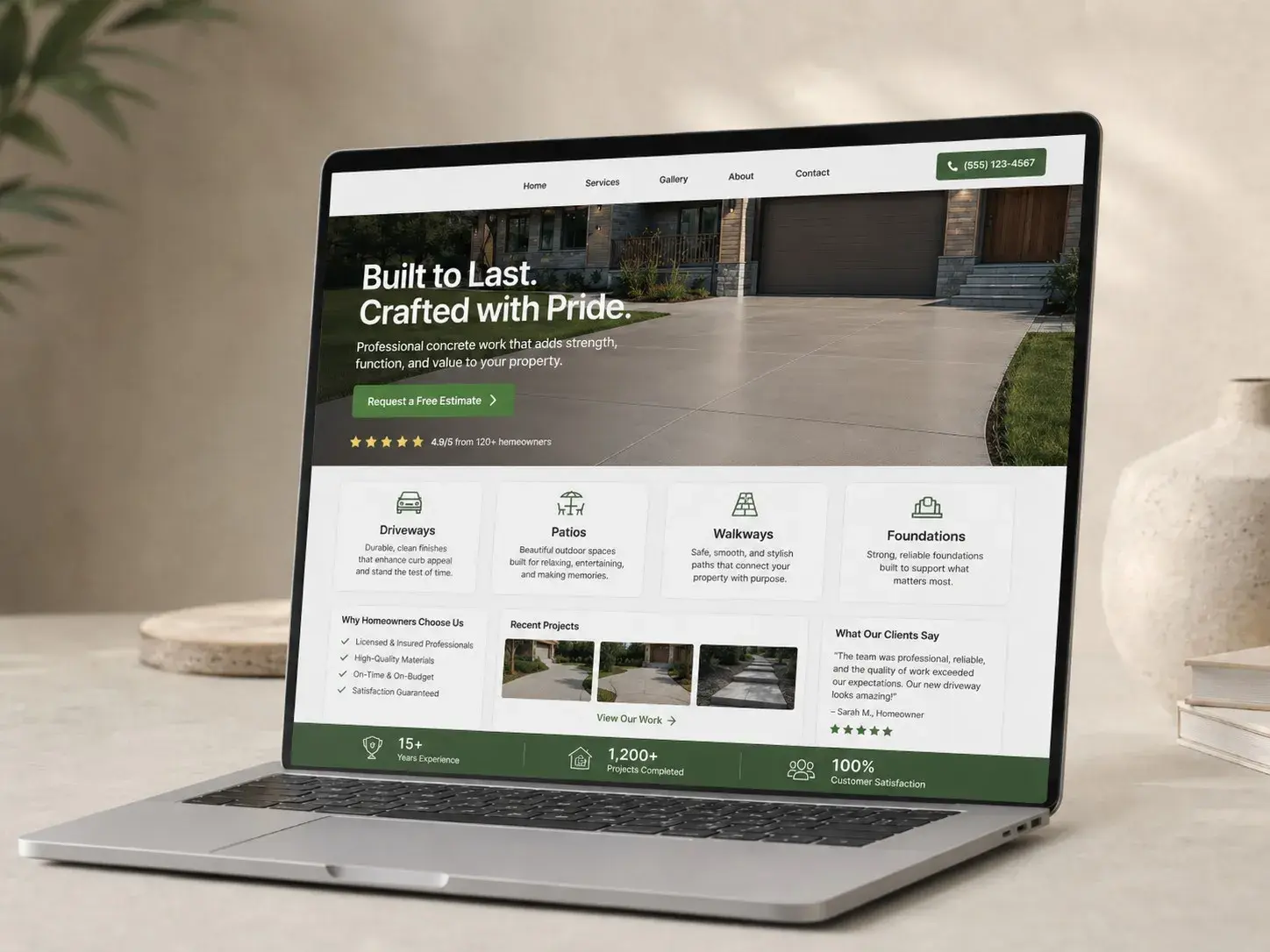
Why Concrete sites are different.
Concrete buyers split into two very different searches, and a site that serves only one loses the other. The first is the homeowner pricing a driveway, patio, or garage slab who wants a square-footage ballpark before talking to anyone, and vague "request a quote" forms lose them. The second is the decorative buyer shopping stamped, stained, and exposed-aggregate finishes visually, comparing galleries the way people shop kitchens. On top of that, concrete is weather-bound. The wet Puget Sound winter compresses the pour season into roughly spring through fall, so much of your traffic is off-season homeowners researching now for work months out. The job of the site is to capture that research, finish inspiration, honest cure-time and permit expectations, a real estimate path, and convert it into booked jobs when the ground dries out.
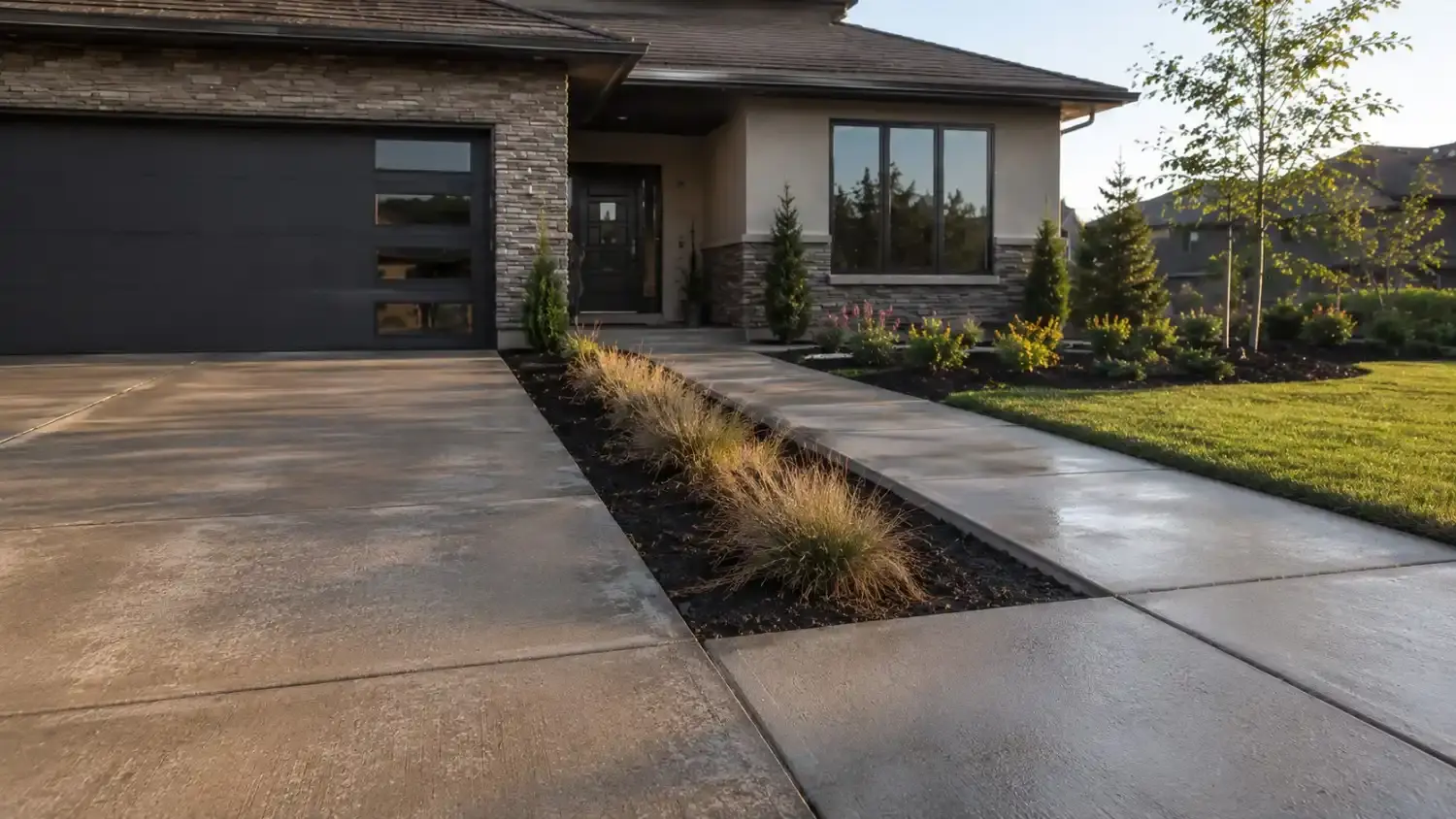
What goes into a great website for concrete companies.
- Flatwork, decorative, and structural pours split into separate pages
- Driveways and patios, stamped and stained finishes, foundations and retaining walls. Each is a different buyer with different intent, so one page per service cluster ranks better and qualifies harder than a single "concrete services" catch-all.
- A square-footage estimate request, not a blank contact box
- The estimate form captures slab dimensions or square footage, finish type, and whether it's new work or a tear-out and replace, so you can give a real ballpark on the first call instead of scheduling a visit just to scope it.
- A stamped and stained finish gallery that sells the upgrade
- Decorative work is bought with the eyes. High-resolution before-and-after sets organized by finish (stamped, exposed aggregate, broom, colored) let a homeowner picture the upgrade and walk in pre-sold on the premium option.
- Pour-window and cure-time expectations set before the call
- Honest copy about Puget Sound's spring-through-fall pour season and how long a fresh slab needs before it can take foot and vehicle traffic. Setting that expectation early filters out the "can you pour this week in January" calls.
- Right-of-way and permit explainers for driveways and sidewalks
- Work in the public right-of-way, like driveway aprons and sidewalk replacement, often needs a city permit homeowners have never heard of. A plain-language explainer positions you as the contractor who handles it, not the one who gets red-tagged.
- Concrete service schema mapped to each pour type
- GeneralContractor LocalBusiness schema with a distinct Service entry per offering and accurate areaServed, so the local pack and AI Overview have the right data to surface you for "stamped patio" or "driveway replacement" separately.
How I approach Concrete web design.
Every site I build runs on the same modern, server-rendered stack, the same one powering chegtech.com. That's deliberate. The default for local-business sites is WordPress with a page builder, and the builder layer tanks Core Web Vitals and ceiling SEO. Custom-built means faster, cleaner, and built to rank from day one.
A new website doesn't earn Google's full trust overnight. Search engines tend to be cautious with newer domains for the first few months, so I build the foundation correctly from day one, with clean structure, proper SEO, and the right signals in place. That way, as your domain ages and gains authority, your site is already positioned to climb instead of playing catch-up.
SEO + AEO Built In
- Local SEOGBP-aligned content, NAP consistency, citation cleanup, neighborhood pages
- Technical SEOCore Web Vitals in the 90s, semantic HTML, structured data, clean sitemap
- AEO OptimizationFAQ schema, AI-Overview-ready content, ChatGPT/Perplexity citation patterns
- Mobile-First Design88% of 'near me' searches happen on a phone (SoCi, 2024), so every page is tested at phone width first
- Schema.org MarkupLocalBusiness, FAQPage, Service schema embedded site-wide
- Conversion TrackingGA4 + GTM + form-submission events wired to real outcomes, not vanity clicks
Tech Stack
- Next.jsReact framework, server-rendered
- AstroContent-first static sites
- TypeScriptType-safe JavaScript
- Tailwind CSSUtility-first styling
- Sveltia CMSGit-based content editor
- NetlifyEdge hosting & deploys
- Cloudflare TurnstileForm spam protection
- Schema.org JSON-LDStructured data for search + AI
- Google Tag ManagerAnalytics + conversion events
- SE RankingKeyword research + rank tracking
- BrightLocalLocal rank tracking + citation audits
- GitHubVersion control + deploy triggers
The trades playbook, applied to concrete
Concrete is visual, trust-driven work, so the gallery does the selling and the estimate path qualifies the lead, the same pattern that works for roofing and remodeling. I would build it for a contractor in the Auburn, Kent, and Puyallup corridor running a dated, photo-thin site, leading with decorative-work photography because homeowners decide on finish before they decide on price.
The Greater Seattle Concrete market.
Western Washington concrete lives and dies by the pour calendar. The wet season pushes most flatwork into spring through fall, with a rush of patio and driveway work once the ground dries. Active markets: Auburn, Kent, Puyallup, Renton, and Maple Valley, where new builds drive stamped-patio demand and the region's slopes and clay soils keep retaining walls and drainage-aware slabs in steady demand.
More on the South King County marketCommon Concrete web design questions.
Realistically spring through fall. Concrete can be poured in cold and wet weather with blankets, accelerators, and cover, but the Puget Sound winter makes that the exception, not the plan. The site is built to capture off-season research, like homeowners pricing a patio in February for a May pour, so your spring schedule is filling while competitors wait for the phone to ring.
The estimate form captures square footage or slab dimensions, finish type, and whether it's new or replacement work, so you can quote a realistic range on the first call. It won't replace an on-site measure for a firm number, but it qualifies the lead and weeds out the tire-kickers before you spend a trip on them.
Yes. The gallery is organized by finish (stamped, stained, exposed aggregate, broom, colored) with before-and-after sets, since decorative concrete is bought visually. If you send me your project photos I'll organize, compress, and lay them out. If your library is thin, I'll structure the gallery so it's easy to keep adding to after launch.
Three to four weeks for a full custom build: site, service-segmented pages, finish gallery, schema, Google Business Profile, and analytics. Same $2,500 flat starting price as every other ChegTech build, project by project, no retainer. See pricing →
What clients say about working with me.
5.0 rating across 14 Google reviews.
Loved working with Jonah. Website was phenomenal and I was able to get all the features I wanted.
Nathan M.
Verified Google review
Very good job at making websites I very recommend him for all works.
Lucas M.
Verified Google review
ChegTech was the best fit for my Business! Took every detail into consideration, and helped me turn my vision into a reality. I dreaded the thought of needed to get a website built for my HVAC Business, and between the hundreds of spam calls and pushy sales rep. I took the time to research and call a few Web designers, ChegTech was the perfect fit. Not only are they local to me, but they made sure everything was done to my satisfaction. Love the Website, and will continue to recommend ChegTech to everyone I come across!
Dennis S.
Owner, Pinnacle Air Control

Every Concrete site is designed, coded, and optimized by Jonah Chegarnov. No subcontractors, no account managers, no handoffs. Founder of ChegTech · Web Designer & SEO in Auburn, WA.
More about JonahReady to talk about your Concrete project?
Project-by-project. No retainers, no contracts. Starting at $2,500.
ChegTech · Auburn, WA 98001 · serving Greater Seattle · (206) 940-8704 · jonah@chegtech.com