
Website for electricians that reads as licensed and gets found.
A website for electricians should look as licensed and capable as the work, and customers should actually be able to find it. I build the whole thing properly, so the first thing a visitor notices is that you take your work seriously, backed by a structure that ranks well and keeps climbing as your site builds authority. It also encourages satisfied customers to leave reviews, so your credibility keeps growing without an agency runaround.
By Jonah Chegarnov · Updated
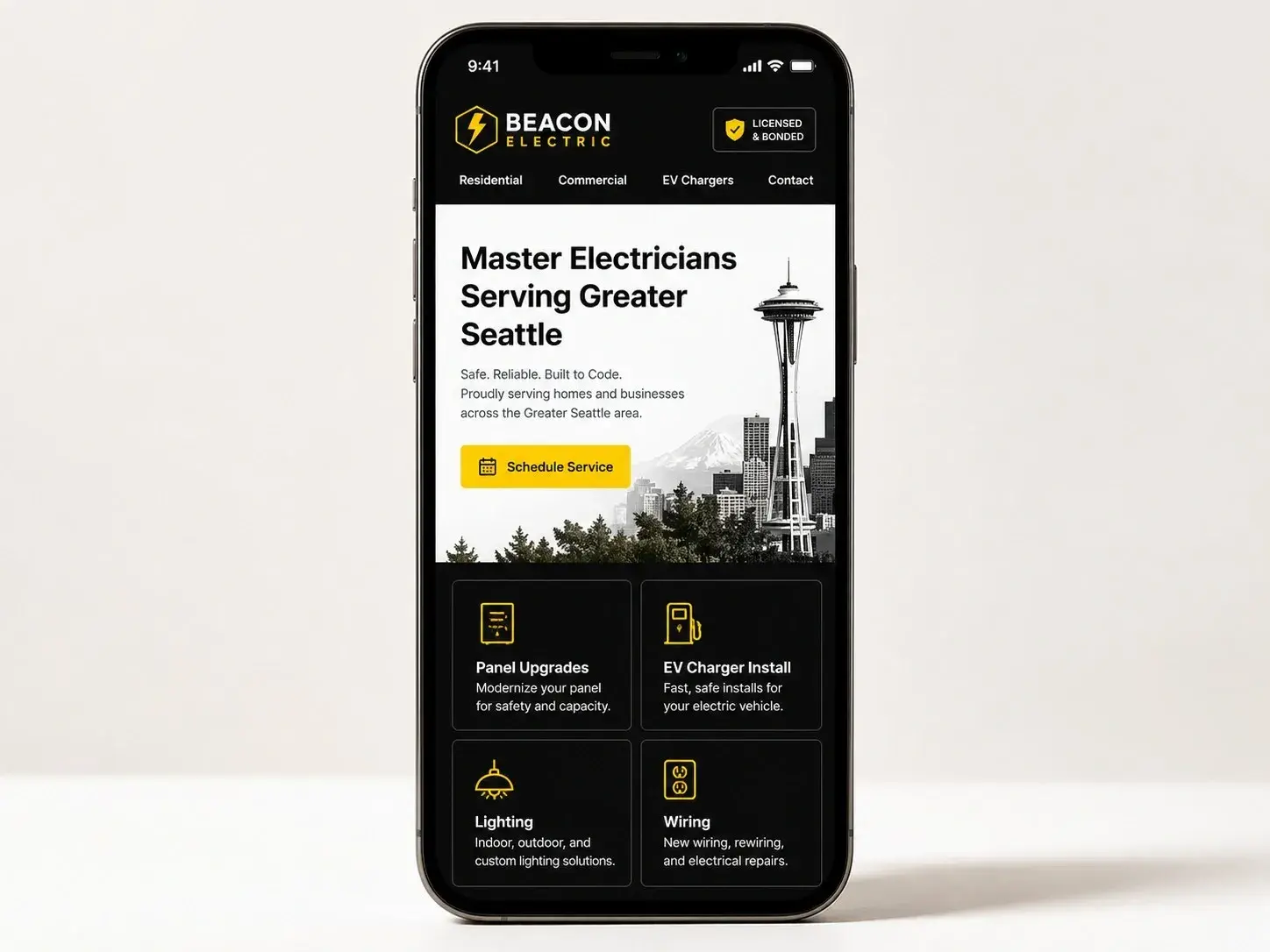
Why Electrician sites are different.
Electrical work is one of the few residential trades where credentialing genuinely moves the needle. "Master electrician" reads as meaningfully different from "electrician" to homeowners considering a $4,000 panel upgrade, and the sites that surface that credential prominently convert better than the ones that bury it. The other shift worth designing for is the EV-charger and panel-upgrade categories. Both are growing query categories most existing electrician sites haven't built pages for. They're still leading with "residential electrical services" while the real demand is for [Tesla wall connector installation Auburn] and [200-amp panel upgrade Puyallup]. Building those pages specifically captures intent the broad service pages can't. What separates a site that actually books jobs from one that just exists is the path after the click: the credential read clearly, a brand-specific page that matches the search, and a simple way to request the job (a click-to-call or a short booking form) right where the prospect is convinced. The real Google reviews on the page carry the rest of the trust.
Sources: Washington State L&I, electrician certification levels
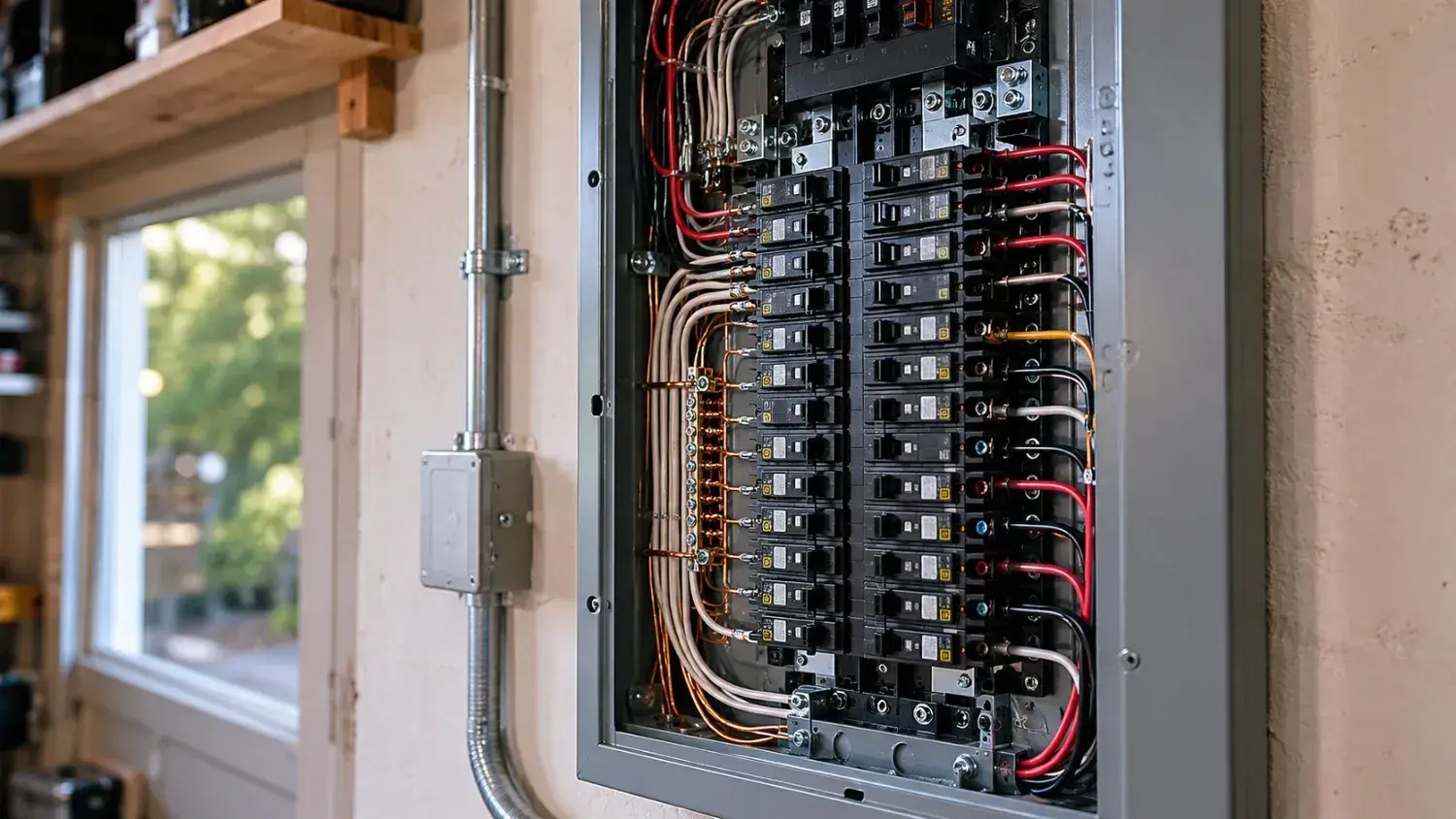
What goes into a great website for electricians.
- Master electrician credential displayed prominently
- License number, classification, and bonding visible in the footer of every page, and called out in the header on residential pages where credential-shopping is heaviest.
- EV charger install landing pages
- Tesla wall connector, ChargePoint, Wallbox, separate pages for each charger family with realistic install cost ranges and the panel-capacity questions that actually determine the quote.
- Panel upgrade conversion path
- 200-amp panel upgrade is one of the highest-LTV residential jobs. Dedicated page with permit timeline, typical cost range, what triggers the upgrade (EV, hot tub, ADU, heat pump), and a click-to-call plus a short contact form right on the page so a convinced homeowner can book without hunting for your number.
- Residential vs commercial split
- Distinct architecture for residential and commercial intent, the customer journeys, decision-makers, and quote-cycle lengths are different enough that one merged page serves neither well.
- Financing for the big-ticket residential work
- Panel upgrades, whole-house rewires, and ADU electrical packages benefit from financing partner integration on the page where the prospect is already convinced.
- Permit-aware FAQ content
- Real customer questions about WA L&I electrical permits, inspection timelines, and what triggers a service-disconnect, wrapped in FAQPage schema so AI Overview can extract.
How I approach Electrician web design.
Every site I build runs on the same modern, server-rendered stack, the same one powering chegtech.com. That's deliberate. The default for local-business sites is WordPress with a page builder, and the builder layer tanks Core Web Vitals and ceiling SEO. Custom-built means faster, cleaner, and built to rank from day one.
A new website doesn't earn Google's full trust overnight. Search engines tend to be cautious with newer domains for the first few months, so I build the foundation correctly from day one, with clean structure, proper SEO, and the right signals in place. That way, as your domain ages and gains authority, your site is already positioned to climb instead of playing catch-up.
SEO + AEO Built In
- Local SEOGBP-aligned content, NAP consistency, citation cleanup, neighborhood pages
- Technical SEOCore Web Vitals in the 90s, semantic HTML, structured data, clean sitemap
- AEO OptimizationFAQ schema, AI-Overview-ready content, ChatGPT/Perplexity citation patterns
- Mobile-First Design70%+ of service searches are mobile, so every page is tested at phone width first
- Schema.org MarkupLocalBusiness, FAQPage, Service schema embedded site-wide
- Conversion TrackingGA4 + GTM + form-submission events wired to real outcomes, not vanity clicks
Tech Stack
- Next.jsReact framework, server-rendered
- AstroContent-first static sites
- TypeScriptType-safe JavaScript
- Tailwind CSSUtility-first styling
- Sveltia CMSGit-based content editor
- NetlifyEdge hosting & deploys
- Cloudflare TurnstileForm spam protection
- Schema.org JSON-LDStructured data for search + AI
- Google Tag ManagerAnalytics + conversion events
- SE RankingKeyword research + rank tracking
- BrightLocalLocal rank tracking + citation audits
- GitHubVersion control + deploy triggers
EV + panel-upgrade demand is the unclaimed lane
On an electrician site I would build around the two categories that are actually growing, EV-charger installs and panel upgrades, each with its own landing page and FAQ schema for the questions homeowners ask. I would treat the Eastside EV demand and the aging South King panel stock as separate intent lanes, the same category-page-plus-schema approach that moved Pinnacle Air Control up the HVAC rankings.
The Greater Seattle Electrician market.
Washington has the second-highest EV adoption per capita of any state, behind only California, which means residential charger-install demand is consistently growing, especially in Bellevue, Redmond, Sammamish, and the broader Eastside, where Tesla density is highest. Panel-upgrade demand follows the same map plus older South King housing stock in Auburn, Kent, and Renton where the 100-amp service is finally getting maxed out by heat-pump conversions.
More on the Eastside marketCommon Electrician web design questions.
Yes, separate pages for Tesla wall connector, ChargePoint Home Flex, Wallbox, and Emporia, because customers search by brand. Each page covers the install considerations that actually determine the quote: panel capacity, conduit run length, breaker availability, and whether a load-management module is needed.
Distinct top-level navigation and distinct landing pages. Commercial electrical intent (tenant improvements, service entrance work, three-phase) has different decision-makers and longer quote cycles than residential. Trying to serve both from one page dilutes both conversion paths.
Out of scope for a flat-rate build. Static availability windows and a contact form posting to your dispatch software is the supported pattern. Live calendar integration (Calendly-style booking) is doable if your scheduling is straightforward, discuss on the call.
LSAs work well for electricians, especially in EV-dense Eastside markets. The site doesn't run the LSAs directly but it does provide the conversion infrastructure they feed into. Ongoing SEO and ad work →
What clients say about working with me.
5.0 rating across 14 Google reviews.
Loved working with Jonah. Website was phenomenal and I was able to get all the features I wanted.
Nathan M.
Verified Google review
Very good job at making websites I very recommend him for all works.
Lucas M.
Verified Google review
ChegTech was the best fit for my Business! Took every detail into consideration, and helped me turn my vision into a reality. I dreaded the thought of needed to get a website built for my HVAC Business, and between the hundreds of spam calls and pushy sales rep. I took the time to research and call a few Web designers, ChegTech was the perfect fit. Not only are they local to me, but they made sure everything was done to my satisfaction. Love the Website, and will continue to recommend ChegTech to everyone I come across!
Dennis S.
Owner, Pinnacle Air Control

Every Electrician site is designed, coded, and optimized by Jonah Chegarnov. No subcontractors, no account managers, no handoffs. Founder of ChegTech · Web Designer & SEO in Auburn, WA.
More about JonahReady to talk about your Electrician project?
Project-by-project. No retainers, no contracts. Starting at $2,500.
ChegTech · Auburn, WA 98001 · serving Greater Seattle · (206) 940-8704 · jonah@chegtech.com