
website for construction companies in Greater Seattle
Website for construction companies built for the long sales cycle.
A website for construction companies has to carry the longest sales cycle in the trades, where weeks pass between the first search and a signed contract. Because that decision is so considered, your site has to project competence and scale from the very first visit, so I build it with project galleries and financing up front and a structure that keeps you visible the whole way through. From the first "kitchen remodel ideas" search to the week they finally compare contractors, the prospect keeps meeting your work, and whoever stayed credible across that whole stretch wins the signature.
By Jonah Chegarnov · Updated
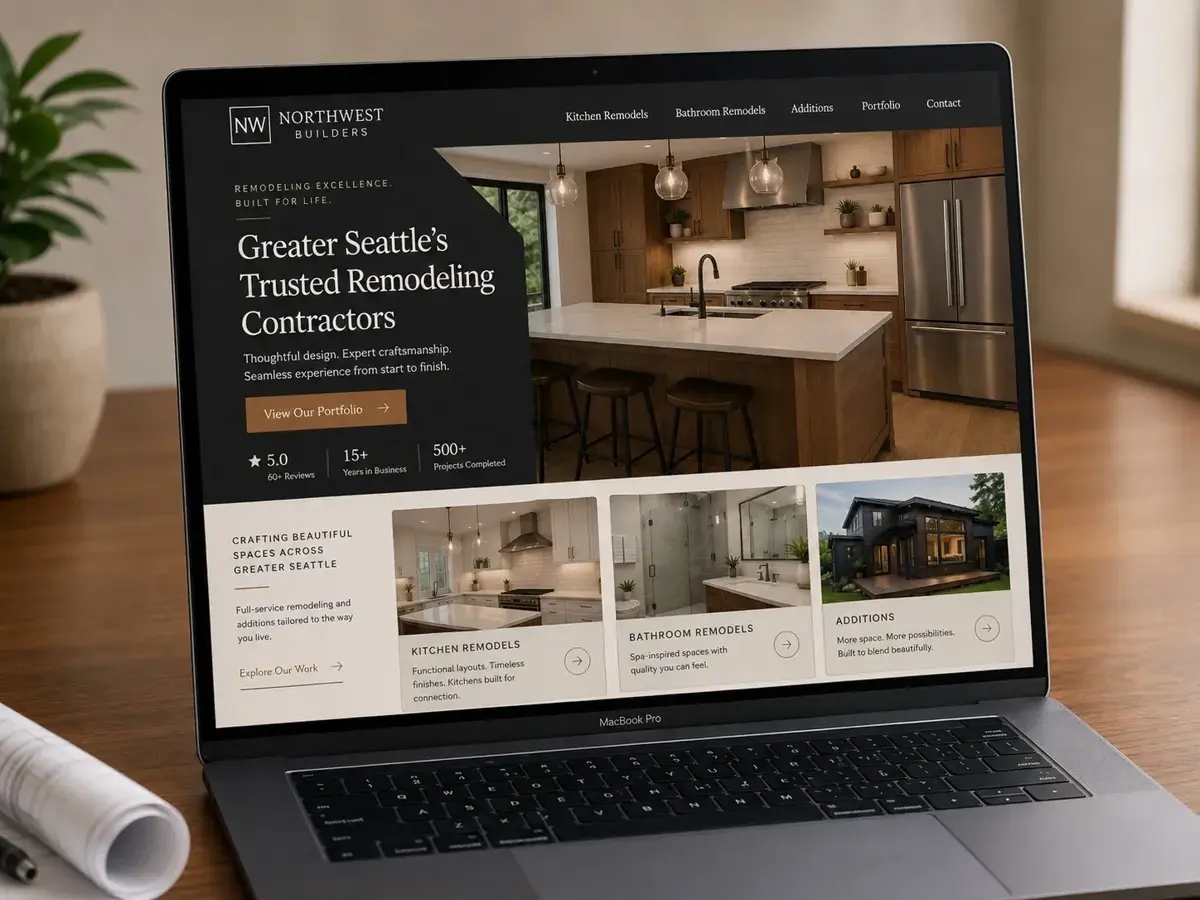
Why Construction sites are different.
Construction customers (whether they're hiring a GC for a full remodel, a builder for a custom home, or a specialty trade for a single scope) research for weeks before they call. Most of the decision happens before they ever fill out a contact form, which means the site's job is to convince during the research, not just capture during the inquiry. What loses construction leads is friction in that research phase: slow project pages, a maze of navigation, no proof the work is real, or a quote form that reads as an interrogation. I build the opposite, a fast, clearly-structured path through real project pages and the real Google reviews on the page, so a prospect stays convinced long enough to reach out. That changes the brief in three specific ways. First, project-specific pages outrank and out-convert generic service pages, "1970s Lake Tapps kitchen full gut" beats "Kitchen remodel services" every time. Second, financing partner display (HELOC partners, in-house financing, or GreenSky) on the project pages dramatically improves close rates because financing is the make-or-break question. Third, the intake form needs scope-qualifying fields up front (budget range, timeline, project scope) to separate serious leads from tire-kickers without losing the warm ones.
Nobody books a remodel today. Design for six months.
This is the exact inverse of the emergency trades. An HVAC site is built for a person who will decide in under two minutes. A construction site is built for a person who will decide in under two hundred days, and building the first when you need the second is why so many contractor sites underperform. The homeowner planning a kitchen or an addition visits repeatedly over months, from different devices, often with a partner, and rarely fills anything in on the first pass. They are collecting evidence. A hard conversion push aimed at that visitor doesn't accelerate the decision — it just removes you from the shortlist, because pressure reads as desperation on a job this size. What works is depth and patience. Enough project detail to keep someone browsing on visit three. Content that answers the questions in the order they actually arrive: what does this cost, how long does it take, what happens to my house while you're in it, what goes wrong. A soft first step — a consultation, a question answered, a project guide — rather than a demand for a commitment they are months away from making. The site's job is to still be the most useful thing they've read when they finally decide.
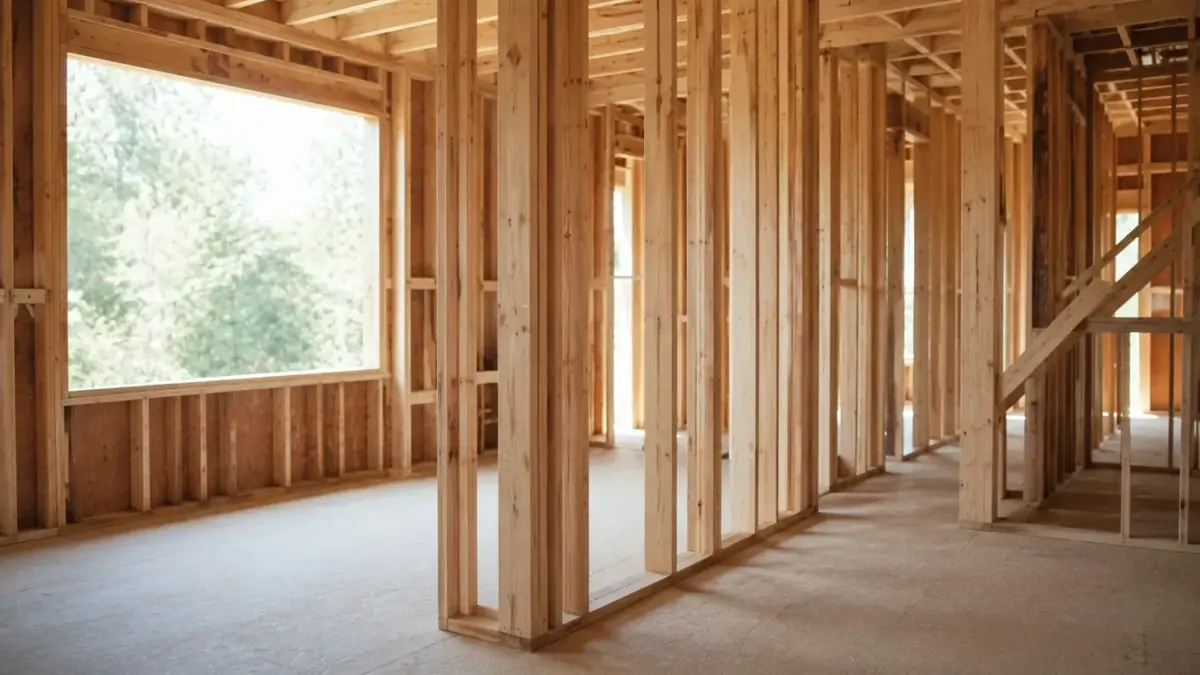
What goes into a great website for construction companies.
- Project pages, not just service pages
- Each completed project gets a dedicated page (full gut kitchens, primary bath remodels, ADUs, additions) with the story, photos, rough timeline, and the kind of homeowner who'd benefit from similar work.
- Before / after presentation that converts
- Side-by-side or slider, same angle and lighting where possible. The dramatic visual difference is the conversion event itself; the rest of the page is supporting evidence.
- Financing partner display on project pages
- HELOC partner integration, GreenSky banners, or in-house financing surfaced where customers are already convinced. Financing is the most common deal-killer; addressing it pre-emptively keeps deals moving.
- Scope-qualified intake forms
- Budget range, timeline, and rough scope captured up front, phrased as helpful pre-qualification, not gatekeeping. Separates real prospects from research-phase browsers without losing the warm ones.
- License, bonding, and insurance footer
- WA L&I contractor license, bond amount, and insurance carriers visible in the footer of every page. The bar for credibility is high for $40k+ projects.
- Process / what-to-expect content
- Realistic timelines, permit handling, change-order policy, and payment schedule explained up front. Reduces customer anxiety and pre-qualifies leads who can't handle a realistic schedule.
L&I, bond, and insurance: what homeowners actually check.
Washington homeowners have been told repeatedly to verify a contractor before hiring, and a meaningful share of them do. The L&I contractor lookup is a public tool and it takes about thirty seconds. That makes credential display a conversion element rather than a legal footnote. The registration number belongs somewhere findable, in text a person can read and copy. The bond amount should be stated. The insurance should be described in terms of what it covers rather than as a badge image. If the work involves specialty trades under separate licences, say which are in-house and which are subcontracted — homeowners ask, and the ones who don't ask assume the worse answer. The strategic point: your unlicensed competition cannot match any of this, and they are frequently the reason a homeowner is nervous in the first place. Publishing the credentials plainly is the cheapest available way to separate yourself from the bad experience they've heard about.
- Registration number as text
- Copyable, not baked into a graphic. People paste it into the L&I lookup.
- Say what's subcontracted
- Electrical and plumbing under separate licences is normal. Hiding it is what costs trust.
- Bond and insurance in plain terms
- "Bonded to $X, liability to $Y" beats a shield icon every time.
Filtering the $5,000 job from the $500,000 job.
A general contractor's contact form receives, in the same afternoon, a whole-house remodel, a request to hang a door, and someone hoping for free advice on a project they'll do themselves. All three arrive as "Hi, can you help with my project?" The cost of not sorting that at intake is a week of your life. The fix is a small number of banding questions that a serious enquirer answers happily and an unserious one abandons: project type, an approximate budget range as brackets rather than a blank field, rough timeline, and whether the property is owned or under purchase. Budget brackets are the one people resist, and the one that does the most work. A range like "under $25k / $25–75k / $75–200k / $200k+" doesn't scare off real customers — it reassures them that you work at their size, and it filters the enquiries that were never going to convert. The alternative is discovering the mismatch an hour into a site visit you drove across the county for.
How I approach Construction web design.
Every site I build runs on the same modern, server-rendered stack, the same one powering chegtech.com. That's deliberate. The default for local-business sites is WordPress with a page builder, and the builder layer tanks Core Web Vitals and ceiling SEO. Custom-built means faster, cleaner, and built to rank from day one.
A new website doesn't earn Google's full trust overnight. Search engines tend to be cautious with newer domains for the first few months, so I build the foundation correctly from day one, with clean structure, proper SEO, and the right signals in place. That way, as your domain ages and gains authority, your site is already positioned to climb instead of playing catch-up.
SEO + AEO Built In
- Local SEOGBP-aligned content, NAP consistency, citation cleanup, neighborhood pages
- Technical SEOCore Web Vitals in the 90s, semantic HTML, structured data, clean sitemap
- AEO OptimizationFAQ schema, AI-Overview-ready content, ChatGPT/Perplexity citation patterns
- Mobile-First Design88% of 'near me' searches happen on a phone (SoCi, 2024), so every page is tested at phone width first
- Schema.org MarkupLocalBusiness, FAQPage, Service schema embedded site-wide
- Conversion TrackingGA4 + GTM + form-submission events wired to real outcomes, not vanity clicks
Tech Stack
- Next.jsReact framework, server-rendered
- AstroContent-first static sites
- TypeScriptType-safe JavaScript
- Tailwind CSSUtility-first styling
- Sveltia CMSGit-based content editor
- NetlifyEdge hosting & deploys
- Cloudflare TurnstileForm spam protection
- Schema.org JSON-LDStructured data for search + AI
- Google Tag ManagerAnalytics + conversion events
- SE RankingKeyword research + rank tracking
- BrightLocalLocal rank tracking + citation audits
- GitHubVersion control + deploy triggers
Invisible to booked in 2 months
Velare Remodeling and Restoration in Bonney Lake went from minimal online presence to landing inbound clients within two months (including the build-to-launch time) by leaning into project pages over service pages, real photography over stock, and a contact form that pre-qualified leads without scaring them off.
Read the full case studyVelare Remodeling: built to be found.
Velare Remodeling and Restoration is a general contractor in Bonney Lake, working the SR-410 corridor on remodeling and restoration projects. The build was aimed at one thing: making them findable by the people already searching for home remodeling and construction work in their market. That meant a custom server-rendered site rather than a template, project pages structured around the work homeowners actually search for, real photography of completed jobs instead of stock imagery, and the local and structured-data groundwork that lets a regional contractor surface for regional searches. The outcome being claimed here is a visibility one, and only that. The site exists to be found by someone typing a remodeling query in the Bonney Lake and Sumner area, where a lot of capable contractors are still effectively invisible online. I'm not attaching booking or revenue figures to it, because the verified numbers I have are for other clients and I'd rather leave a gap than fill it with something I can't stand behind.
Sources: Velare Remodeling case study
The Greater Seattle Construction market.
South Pierce and South King County drive most of the residential remodeling demand in the region. Active project corridors: Auburn, Kent, Federal Way, Renton, Bonney Lake, Sumner, Lake Tapps, and Puyallup, mid-century and 1990s housing stock now hitting kitchen/bath remodel cycles. Eastside (Bellevue, Sammamish, Issaquah) drives the higher-end remodel and ADU work. Permit timelines vary meaningfully by jurisdiction; the site should signal local familiarity.
More on the Bonney Lake marketConstruction sits in the trades group, and the problems it shares with the rest of that group are covered on web design for the trades.
Almost every ground-up build starts with a site-prep contractor, and their brief is covered in the website for excavation companies.
Common Construction web design questions.
Yes, and most contractors instinctively resist this. The data is consistent: budget-qualified intake forms produce fewer leads but dramatically higher conversion-to-quote-to-sale. Tire-kickers self-select out; serious prospects appreciate the directness. Phrased correctly ("this helps me prep the right options"), it doesn't lose warm leads.
$4,500 flat, one-time, is the whole build cost. Hosting and maintenance run $150 a month, and SEO or content retainers, if you want ongoing ranking work, run $350 to $850 a month. Scope moves mainly with project pages, and fewer is genuinely fine, since five to ten substantive project pages outperform fifty thin ones with the way remodel clients research. See pricing →
Front-end display, yes, banners, pre-qual links, monthly-payment calculators where your financing partner provides the embed. GreenSky, Hearth, and Service Finance all integrate cleanly. Full credit decisioning runs through your partner.
Two CTAs: a low-friction "schedule a consultation" for the warmer prospects already considering you, and a higher-friction "request a quote" with scope-qualifying fields for prospects ready to talk numbers. Surfacing both means the warm leads convert without the rest of the funnel dropping off. See pricing →
What clients say about working with me.
5.0 rating across 14 Google reviews.
Loved working with Jonah. Website was phenomenal and I was able to get all the features I wanted.
Nathan M.
Verified Google review
Very good job at making websites I very recommend him for all works.
Lucas M.
Verified Google review
ChegTech was the best fit for my Business! Took every detail into consideration, and helped me turn my vision into a reality. I dreaded the thought of needed to get a website built for my HVAC Business, and between the hundreds of spam calls and pushy sales rep. I took the time to research and call a few Web designers, ChegTech was the perfect fit. Not only are they local to me, but they made sure everything was done to my satisfaction. Love the Website, and will continue to recommend ChegTech to everyone I come across!
Dennis S.
Owner, Pinnacle Air Control

Every Construction site is designed, coded, and optimized by Jonah Chegarnov. No subcontractors, no account managers, no handoffs. Founder of ChegTech · Web Designer & SEO in Auburn, WA.
More about JonahReady to talk about your Construction project?
Project-by-project. No retainers, no contracts. Builds are $4,500 flat.
ChegTech · Auburn, WA 98001 · serving Greater Seattle · (206) 940-8704 · jonah@chegtech.com